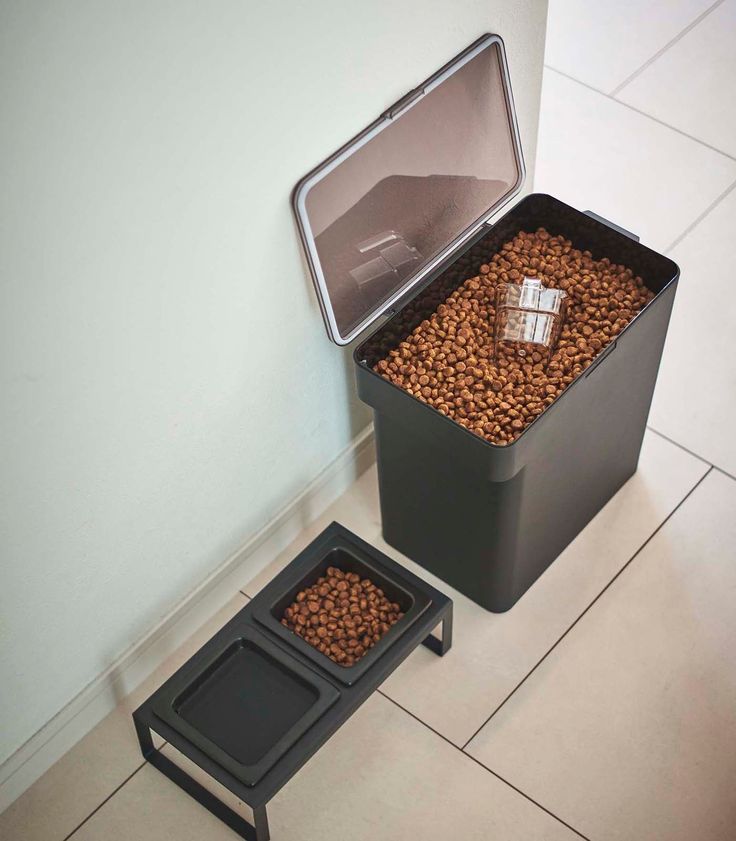
Your Dog Deserves a Cozy Corner Even in the Smallest Home
Living in a small home or apartment doesn’t mean your dog has to miss out on a cozy, stylish space of their own. Even a tiny corner, closet, or hallway nook can be turned into a functional dog area with the right dog room decor ideas for small spaces.
The trick isn’t finding more square footage. It’s using the space you already have more wisely. With smart furniture choices, vertical storage, and a few creative layout tricks, you can give your dog a comfortable spot without sacrificing your home’s style or your limited floor space.
Many pet owners assume a proper dog space requires a spare room, a big budget, or major renovation work. That’s simply not true. Some of the coziest, most functional dog corners come from repurposing overlooked spots like closets, stair gaps, or unused furniture. All it takes is a little planning and creativity.
Below are 12 practical and stylish dog room decor ideas for small spaces that work in apartments, condos, and compact houses alike. Each one is easy to copy, budget-friendly, and designed to make the most of tight quarters.
1. Turn a Corner Into a Cozy Dog Nook
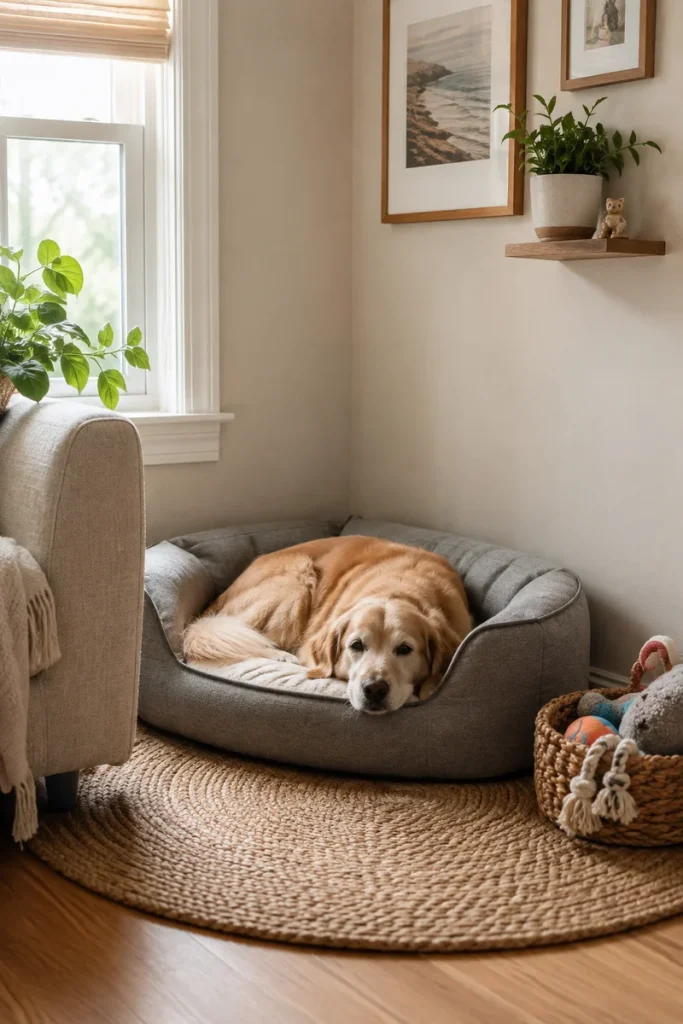
Corners are some of the most underused areas in any home. A quiet corner in the living room, bedroom, or hallway can become a complete little dog space in under an hour.
What you’ll need:
- A small dog bed or cushion
- A soft rug underneath for warmth and grip
- A basket for toys
Place the bed against the wall so your dog feels secure on two sides. Dogs naturally gravitate toward spots that feel enclosed and protected, which is why corners work so well. Two solid walls behind them mimic the safety of a den, helping anxious or shy dogs settle in faster.
Add a small round rug to define the space visually, even without walls. A rug does more than add comfort. It creates a visual boundary that tells your dog “this spot is yours,” which can help with training and reduce wandering during nap time.
Keep the color of the rug and bed close to your existing decor so the nook blends in rather than standing out as an obvious add-on. This works especially well for smart dog room ideas that don’t require any construction or renovation, making it one of the easiest starting points for small-space dog decor.
2. Convert the Space Under Your Stairs
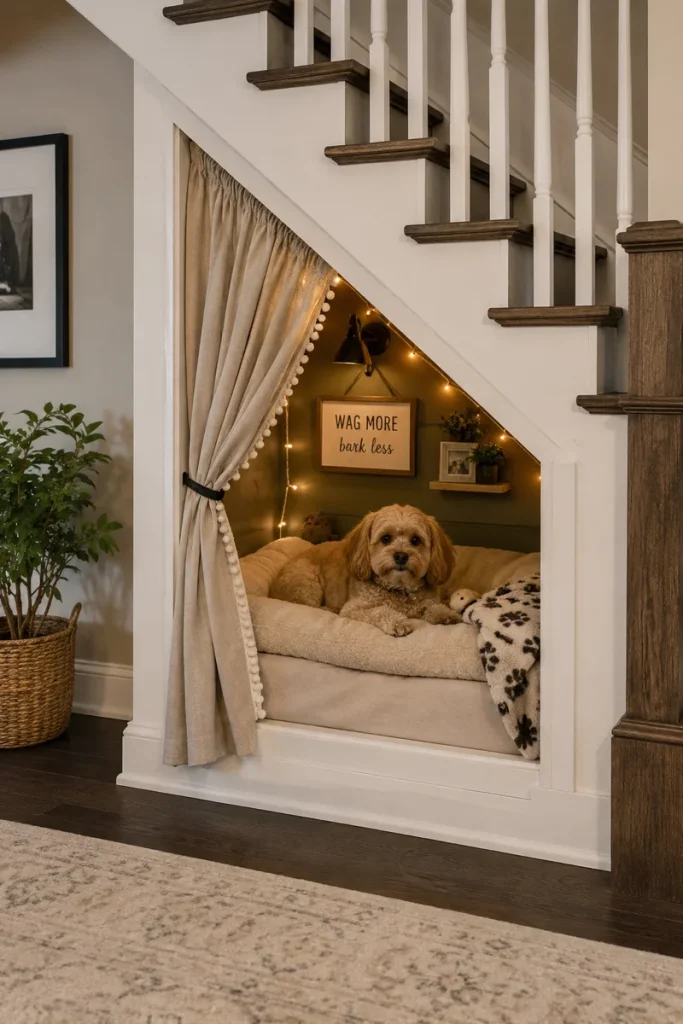
If your home has a staircase, the space underneath is often wasted. This awkward triangular area is actually perfect for a compact dog den, since most people never use it for anything beyond storage.
You can build a simple wooden frame, add a cushion, and install a small door or curtain for privacy. The sloped ceiling that makes this space awkward for humans is actually ideal for dogs, who prefer smaller, cozier enclosures over wide open areas.
Many homeowners paint the interior a fun color or add wallpaper to make it feel like a proper little room instead of leftover space. A string of battery-powered fairy lights or a small battery lantern can also make the nook feel warm and inviting, especially if natural light doesn’t reach that part of the house.
If your dog is larger, measure the tallest point of the space carefully before committing to a design, since headroom can be limited near the front of the stairs. For a full walkthrough on building this kind of setup, check out these dog kennel under stairs ideas for inspiration on layout and materials.
3. Choose Multi-Functional Furniture

In small spaces, every piece of furniture should work double duty. Rather than adding a separate dog bed, crate, and storage bin that all compete for floor space, look for pieces designed to serve two purposes at once.
- A storage bench with a built-in dog bed underneath
- An end table with a hidden crate compartment
- A window seat that doubles as a dog lounging spot
- An ottoman with a removable top that reveals a soft bed inside
This approach keeps your living room decor ideas for small spaces looking clean and intentional, rather than cluttered with separate dog gear scattered around the room. Multi-functional furniture also tends to be more visually cohesive since it’s designed as a single unit instead of several mismatched items.
When shopping, measure your available wall space first, then look for furniture with dimensions that fit exactly. A piece that’s slightly too large can make a small room feel even tighter, while the right size will make the space feel deliberately designed.
4. Install a Wall-Mounted Feeding Station
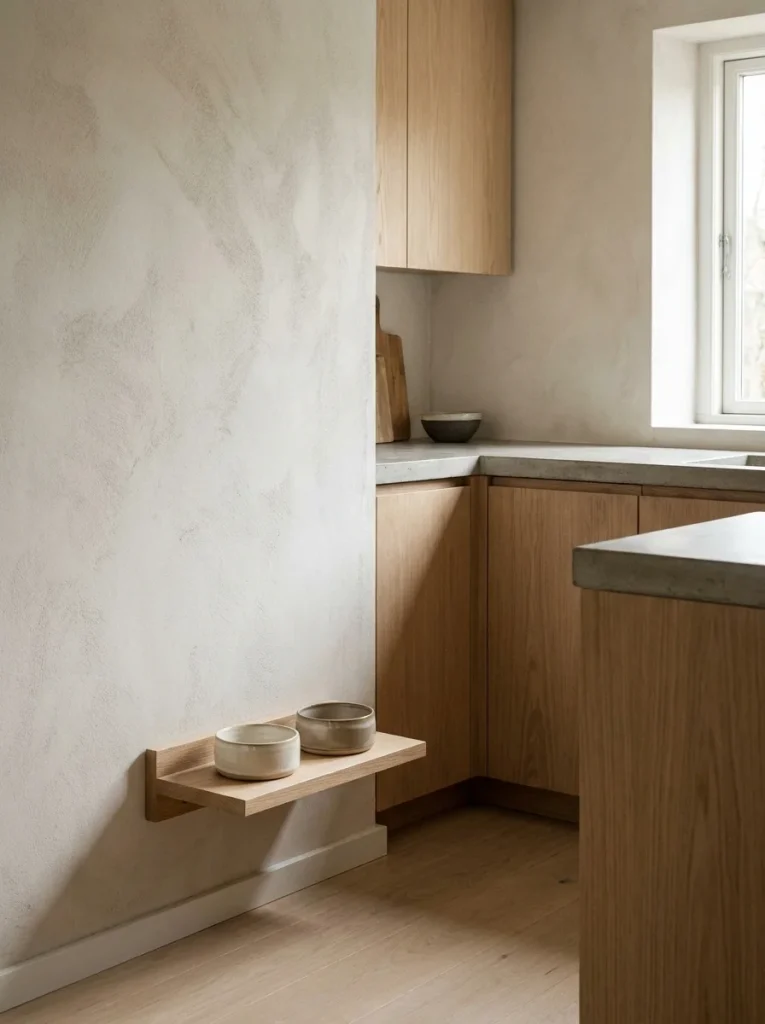
Floor space is precious in small homes, so lifting things off the ground is one of the smartest moves you can make. A wall-mounted or elevated feeding station keeps food and water bowls tidy without eating into your walking space.
Look for a slim shelf unit that holds two bowls at a comfortable height for your dog. Elevated feeding stations also offer a health benefit for some dogs, particularly larger breeds, since raised bowls can make eating and drinking more comfortable on the neck and joints.
This also helps reduce mess since bowls are less likely to get bumped or kicked while your dog eats. A wall-mounted station keeps the surrounding floor dry, which matters even more in small kitchens or hallways where foot traffic is already tight.
If you’re renting and can’t drill into walls, look for freestanding elevated stations that sit flush against a wall instead. If you want more layout options, these dog feeding station ideas show several small-footprint designs that work well in kitchens and hallways.
5. Add Vertical Storage for Toys and Supplies
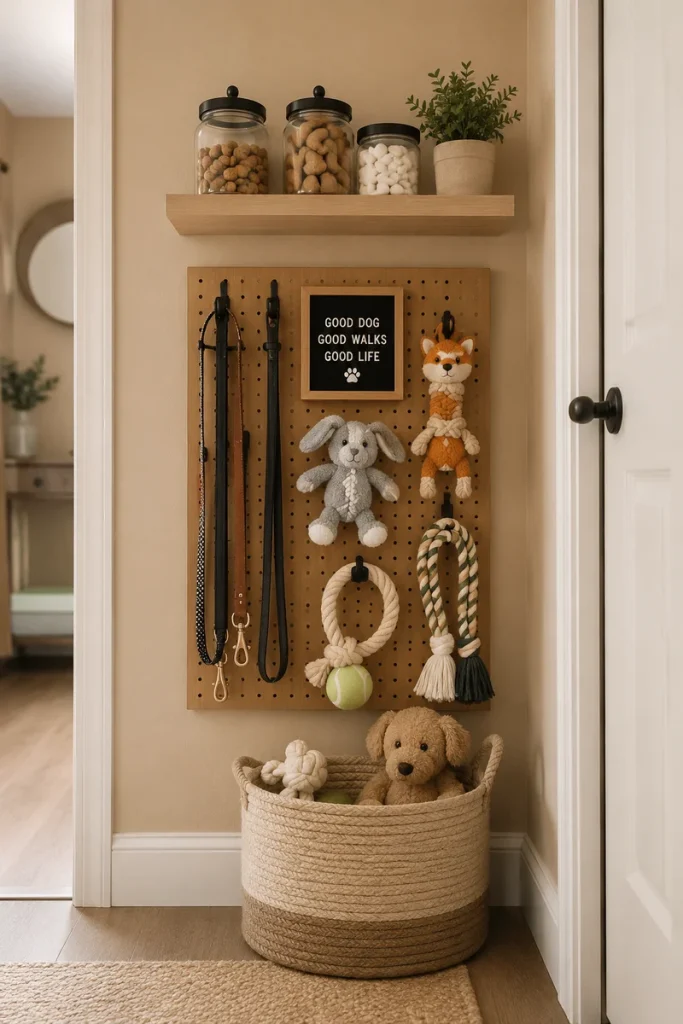
Instead of a bulky toy box on the floor, use your walls. Vertical storage keeps supplies organized while freeing up precious square footage, which matters more in small homes than almost anywhere else.
Ideas include:
- Hanging baskets mounted on the wall
- A pegboard with hooks for leashes and toys
- Floating shelves for treats and grooming supplies
- A mounted mesh bag for holding extra blankets or towels
This kind of vertical thinking is one of the easiest dog room decor ideas for small spaces because it requires no extra floor space at all. It also makes cleaning easier, since there’s nothing sitting on the ground to sweep or vacuum around.
Group similar items together on the same shelf or hook set so everything has an obvious “home.” This small habit prevents clutter from building back up over time, which is especially important in compact rooms where mess is more noticeable.
6. Use Fold-Away or Collapsible Dog Beds
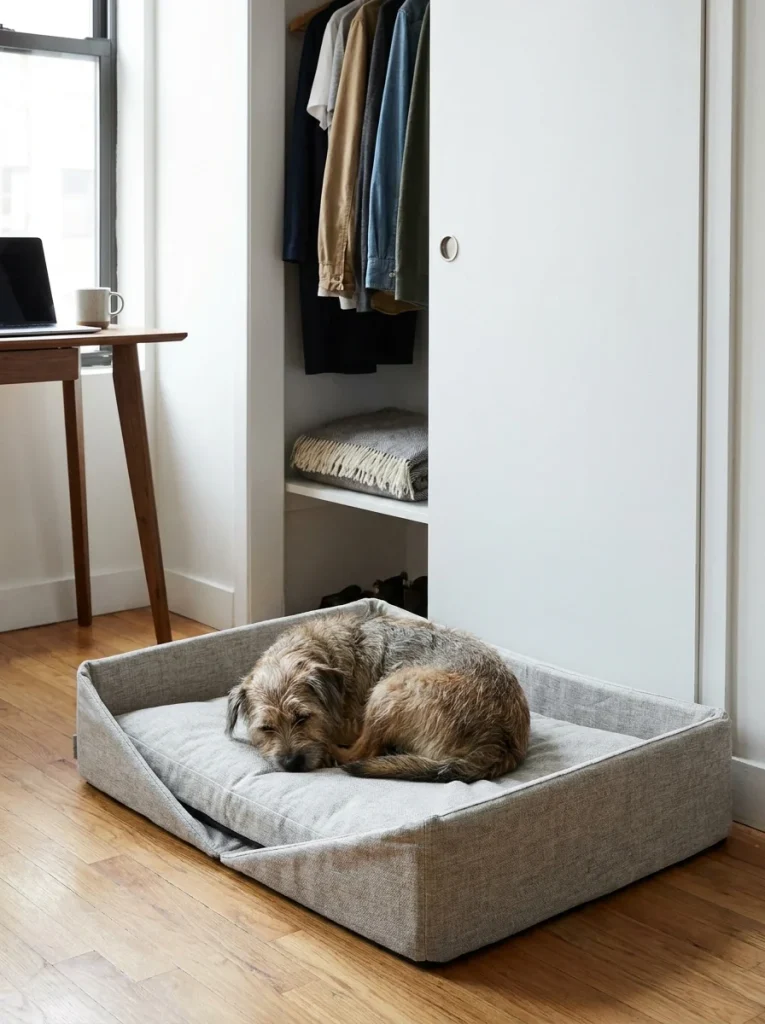
If your dog’s space needs to double as a guest room, home office, or laundry area, a collapsible bed is a game changer. These beds fold flat or tuck into a closet when not in use, giving you full flexibility throughout the day.
Look for beds with a removable, washable cover so cleaning is quick. Since small spaces show dirt and pet hair more easily than larger rooms, being able to toss a cover in the wash regularly keeps the whole area looking fresh.
This option works especially well in studio apartments where every inch of the room serves more than one purpose throughout the day. A fold-away bed means your dog’s sleeping spot doesn’t have to compete for space with your desk, dining table, or guest sofa bed.
Some collapsible beds also come with a built-in storage pouch, letting you tuck away a toy or two right alongside the bed itself, keeping everything in one place when not in use.
7. Build a Built-In Nook Inside Existing Furniture
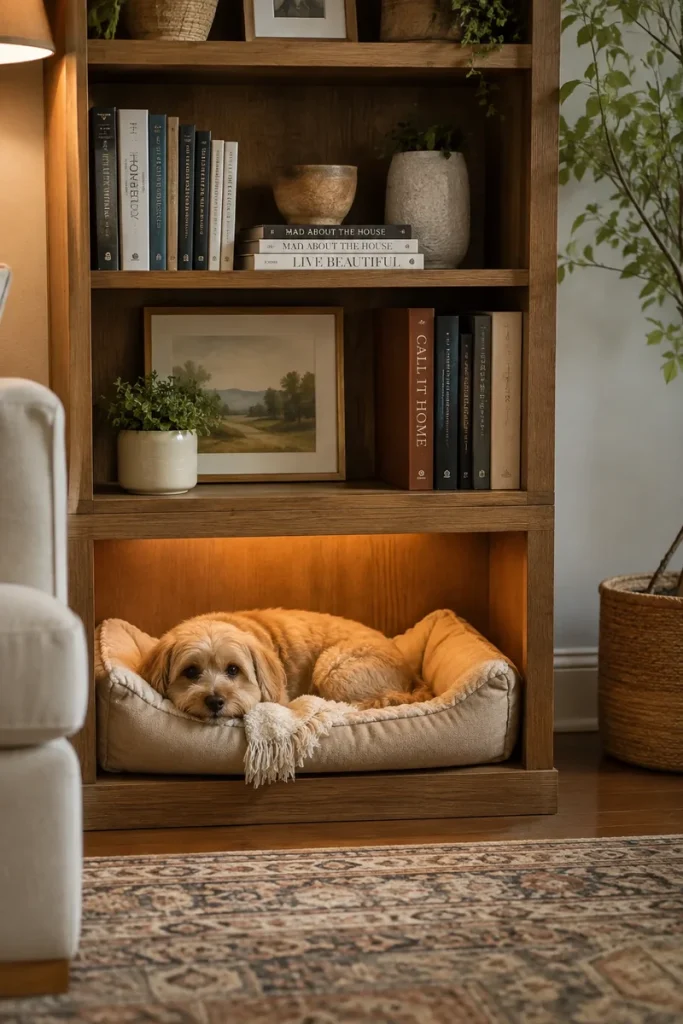
Rather than adding new furniture, carve out space inside what you already own. A built-in nook can be created inside:
- A bookshelf with one shelf removed
- The bottom cabinet of an entertainment center
- A closet with the door removed
- The open space underneath a raised platform bed
This method blends the dog space seamlessly into your existing decor instead of standing out as an obvious “pet area.” Since the furniture is already part of your room, this option requires very little extra planning and almost no additional floor space.
It’s also one of the more budget-friendly ideas on this list, since you’re repurposing furniture you already own rather than buying something new. A quick coat of paint on the interior panel and a soft cushion is often all it takes. For more built-in inspiration, browse these dog kennel decor ideas for creative furniture conversions.
8. Stick to Light, Neutral Colors
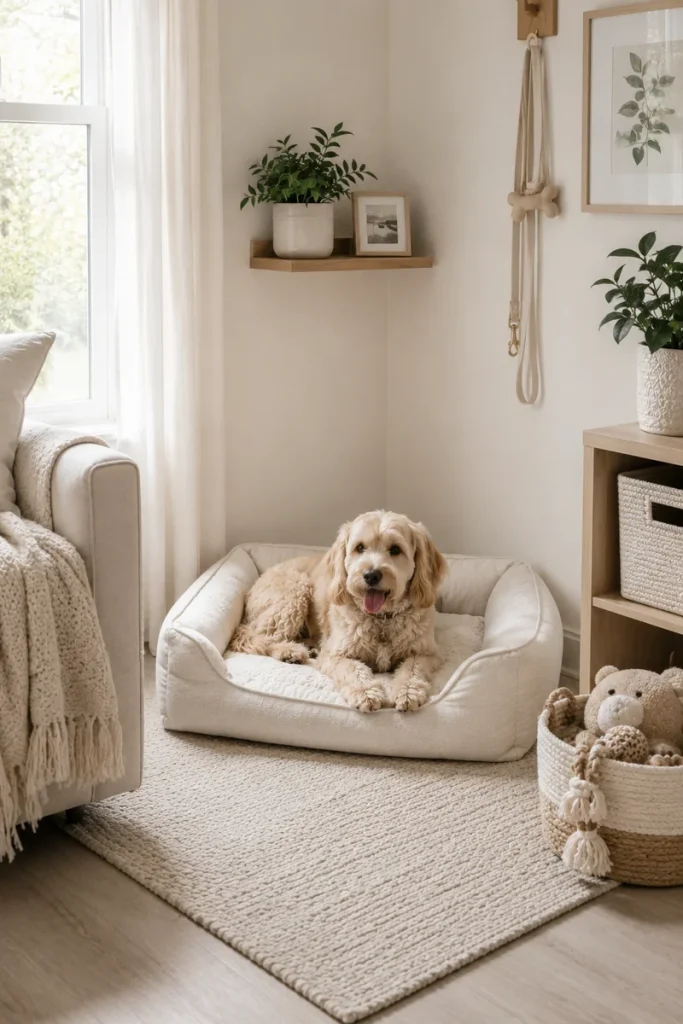
Color has a big impact on how large or small a room feels. In tight spaces, dark colors can make things feel cramped and closed in, while lighter tones do the opposite.
Instead, choose:
- Soft whites and creams
- Light greys and beiges
- Pale pastels for a calming effect
- Warm off-whites if the space lacks natural light
Light colors reflect more natural light, which visually opens up the space. This is a simple styling trick that works whether you’re decorating a whole room or just a small dog corner. Even swapping a dark rug or dark bed cover for a lighter shade can noticeably change how open the area feels.
If you want to add personality without darkening the space, use color sparingly through small accents like a name sign, a toy basket, or a single patterned cushion rather than large blocks of bold color.
9. Pick Durable, Washable Flooring
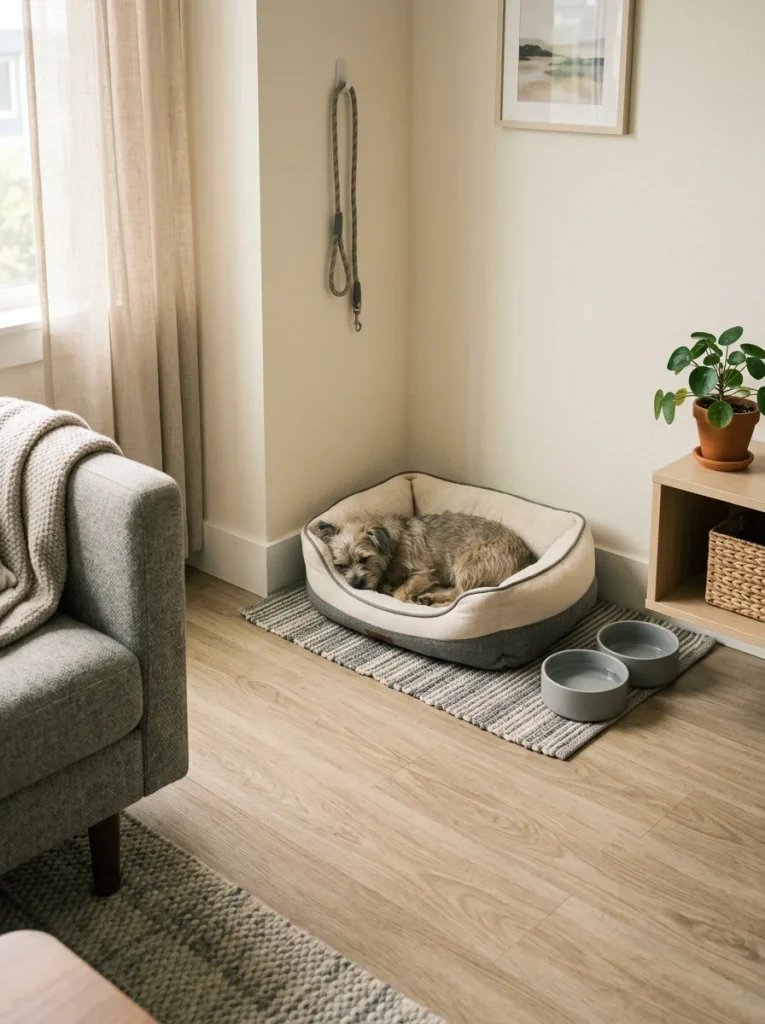
Small spaces get messier faster since everything is closer together. Choosing the right flooring for your dog’s area prevents stains, scratches, and odors from taking over, which matters even more when the space is tight and gets used daily.
Good options include:
- Washable area rugs
- Vinyl or laminate flooring
- Rubber mats for easy wipe-downs
- Interlocking foam tiles for extra cushioning
Durable flooring also protects your investment if you’re renting and need to keep the space damage-free. Vinyl and rubber options are particularly useful near feeding stations, where spills and splashes are more common.
If replacing flooring isn’t an option, a washable rug placed directly under the bed and feeding area can act as a protective layer, catching most messes before they reach the floor underneath. For more detailed flooring comparisons, take a look at these dog kennel flooring ideas.
10. Use Curtains or Sliding Dividers for Privacy
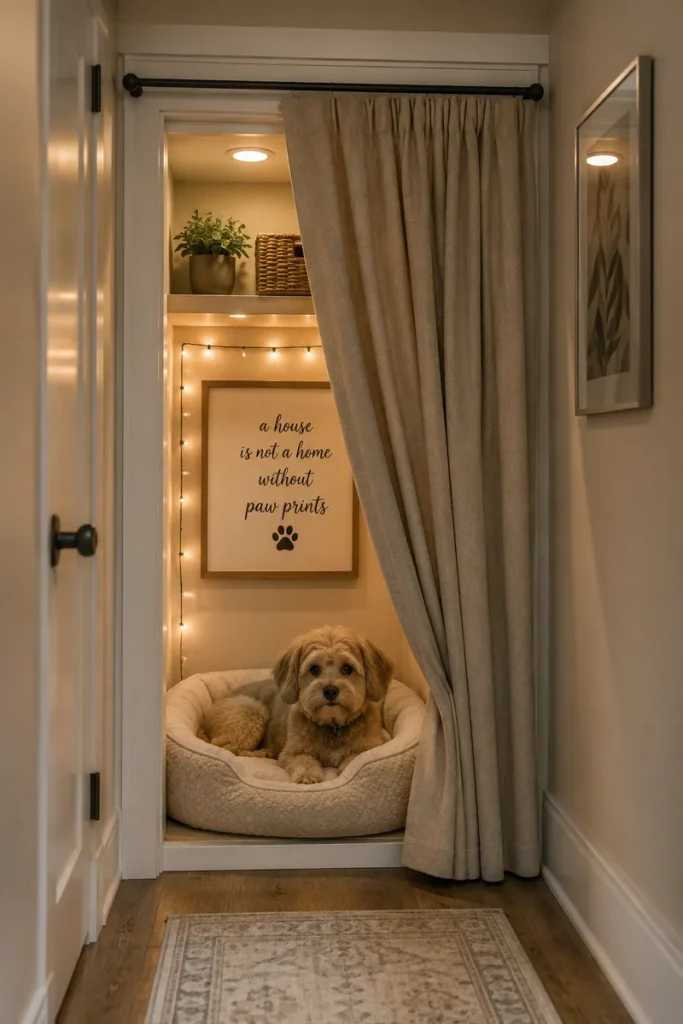
Not every dog space needs solid walls. A lightweight curtain or sliding panel can create a sense of privacy and coziness without permanently closing off the area, which is ideal for renters or anyone who doesn’t want a permanent structure.
This works particularly well for:
- Closet conversions
- Under-stairs nooks
- Corner setups in shared rooms
- Spaces that double as a home office or guest area
Curtains are also easy to swap out if you want to update the look of the space without a full renovation. A simple curtain rod and a fabric panel that matches your existing decor can be installed in minutes, with no drilling or major commitment required.
For dogs who like a bit more privacy while resting, a curtain that can be partially or fully closed gives them the option to retreat when they want quiet time, while still allowing airflow and easy access.
11. Repurpose an Unused Closet
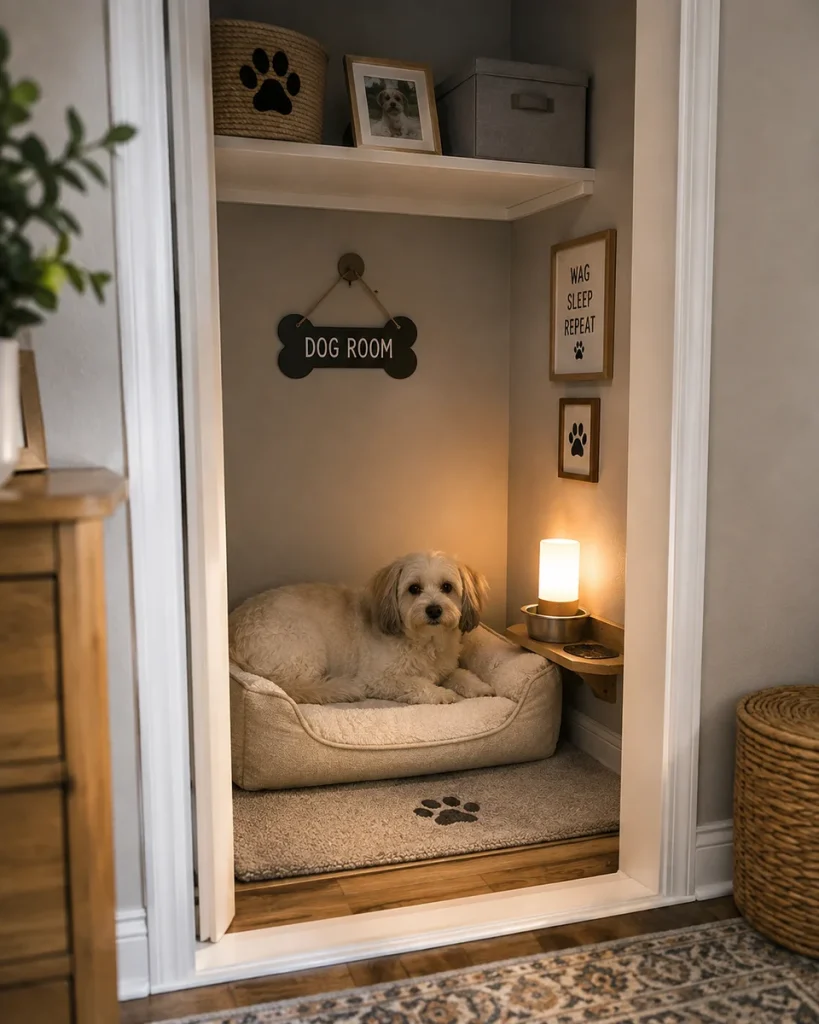
A closet that’s collecting clutter can become one of the best dog spaces in your home. Since closets are already enclosed, they offer natural privacy and a defined boundary for your dog without any additional building work.
To convert one:
- Clear out unused items and donate or store anything you don’t need regularly
- Remove or replace the closet door with a curtain or leave it open for easy access
- Add a bed, small rug, and a nightlight if it’s dark
- Add a small shelf near the entrance for toys or a water bowl
This is one of the most space-efficient dog room decor ideas for small spaces because it uses square footage you’re likely not using anyway. Closets are often located near bedrooms or hallways, which also makes them convenient for nighttime routines.
If the closet doesn’t get much airflow, consider leaving the door open during the day and only using a curtain at night, or install a small vent to keep the space from feeling stuffy.
12. Add Personal Touches
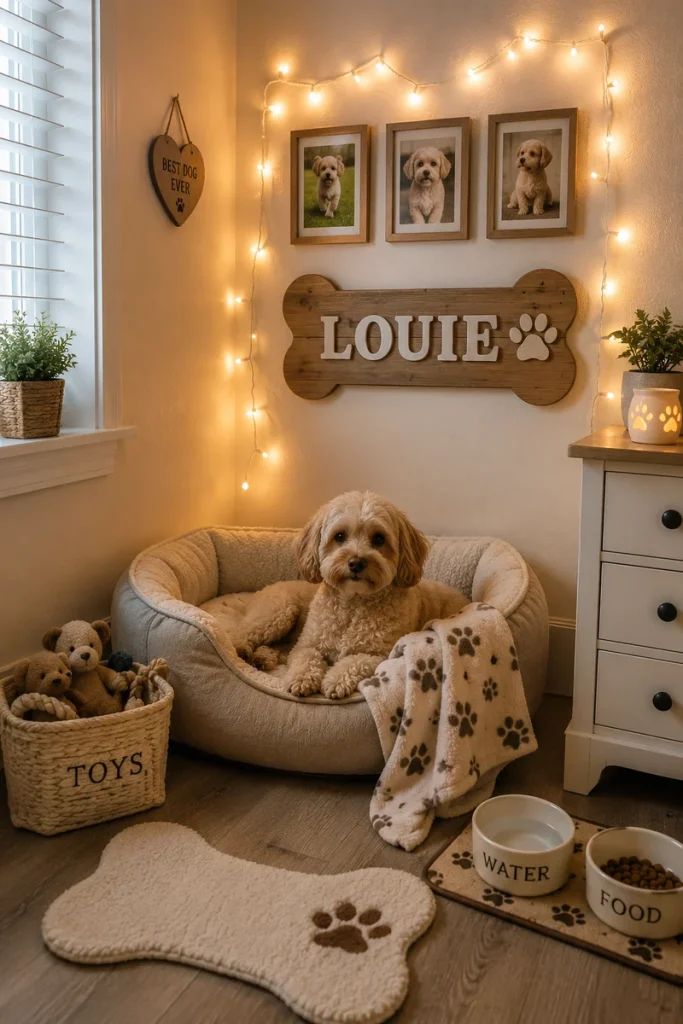
The final step in any small dog space is making it feel special. Small personal details go a long way in tying the whole area together and making it feel like an intentional part of your home rather than an afterthought.
Consider adding:
- A custom name sign above the bed
- A few framed photos of your dog
- A small chalkboard for notes or feeding schedules
- A soft string of lights for a warm, cozy glow
These finishing touches turn a simple functional corner into a genuine little room your dog, and you, will love. They also make the space feel more like a designed part of your home rather than a leftover corner with a bed thrown in.
Rotating these small decor items occasionally, like swapping a photo or updating a chalkboard message, keeps the space feeling fresh without any real cost or effort. If you want more decorating inspiration for the overall look, these dog bedroom ideas offer a range of styles from cozy to modern.
Tips for Keeping a Small Dog Space Organized
Once your dog’s space is set up, a little maintenance keeps it looking great and staying functional over the long run.
- Do a weekly reset. Put toys back in their basket and wipe down surfaces once a week so clutter doesn’t build up.
- Wash bedding regularly. This prevents odors from building up in a tight space, especially in warmer months.
- Rotate toys. Keep only a few toys out at a time to avoid clutter, and swap them out weekly to keep your dog interested.
- Vacuum often. Small spaces show pet hair and dust more quickly, so frequent vacuuming keeps things fresh and presentable.
- Check for wear. Small spaces get more daily use per square foot, so bedding and rugs may need replacing sooner than in larger rooms.
A little routine upkeep makes a huge difference in how the whole space looks and smells, especially in apartments where odors and clutter are more noticeable to guests and neighbors alike.
Common Mistakes to Avoid
Even well-planned dog spaces can go wrong if you fall into a few common traps. Here’s what to watch out for as you set up and maintain your dog’s small-space decor.
Overcrowding the space. More toys and accessories don’t make the space better. Stick to the essentials and rotate items instead of piling everything in at once, which can make even a well-designed nook feel messy and chaotic.
Choosing the wrong materials. Fabrics that aren’t washable or durable will wear out fast in small, high-traffic areas. Always check care labels before buying bedding or rugs for your dog’s space.
Ignoring airflow. Closets and under-stairs nooks can get stuffy. Make sure there’s some ventilation, especially if the door or curtain stays closed often, to keep the space comfortable and odor-free.
Skipping personal touches. A space that’s purely functional can feel cold. Small decor details make the area feel intentional rather than like leftover space nobody bothered to finish.
Forgetting the dog’s comfort. Style matters, but comfort matters more. Always prioritize a soft bed, good lighting, and a quiet location over pure aesthetics, since a space that looks great but isn’t comfortable won’t get used.
Final Thoughts
You don’t need a spare bedroom or a big budget to give your dog a comfortable, good-looking space at home. With these 12 dog room decor ideas for small spaces, even the tiniest corner, closet, or under-stairs nook can become a cozy retreat your dog will love.
Start with one or two ideas that fit your space best, then build from there as time and budget allow. Whether you’re working with a studio apartment or a compact house, small, thoughtful changes add up to a space that works well for both you and your dog.

Izzy is an experienced ranch worker who has a passion for exploring nature and getting up close to wildlife. With her connections to various animal organizations, Izzy is well-versed in animal care and rehabilitation.