How to Find Out What Breed Your Dog Is at Home (Step-by-Step Guide)
Have you ever looked at your dog and wondered, “What exactly are you?” You’re not alone. Millions of dog owners ask the same question every day. Whether you adopted a rescue pup, found a stray, or just have a mixed-looking dog with a mysterious background, figuring out your dog’s breed can be both fun and genuinely useful.
Knowing how to find out what breed your dog is isn’t just about satisfying your curiosity. It can help you understand your dog’s behavior, health risks, exercise needs, and even grooming requirements. In this guide, we’ll walk you through every method available — from simply looking at your dog to using science-backed DNA testing.
Let’s get started.
1. Why Does Your Dog’s Breed Matter?
Before diving into the methods, it’s worth understanding why breed identification matters in the first place.
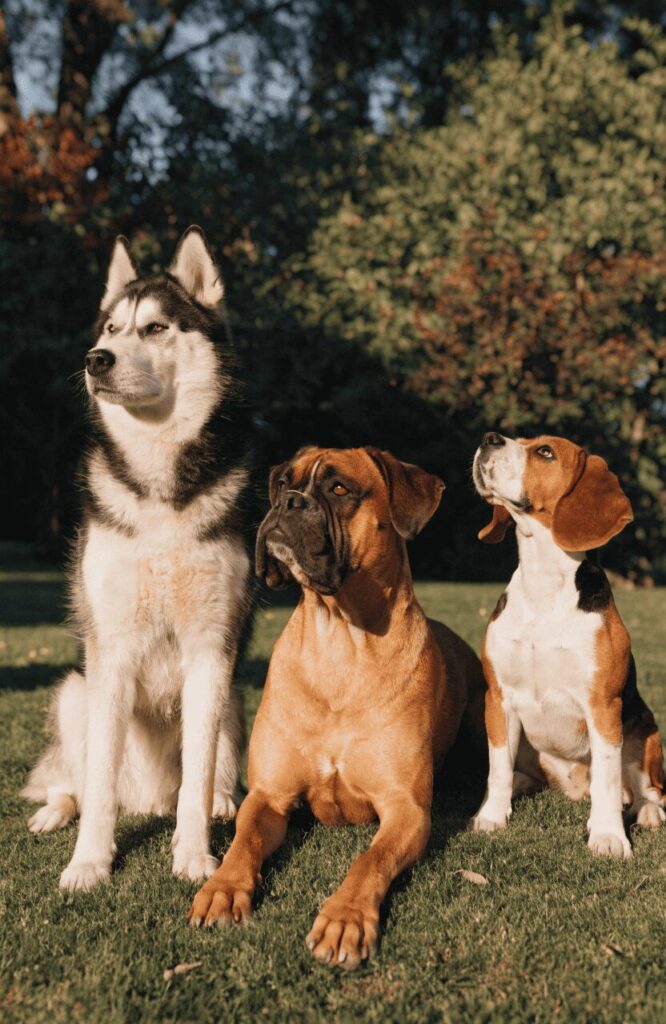
Different dog breeds come with different traits. A Border Collie needs hours of mental stimulation every day. A Basset Hound is perfectly happy lounging on the couch. A Husky needs cold weather and lots of exercise, while a Shih Tzu thrives in an apartment.
Knowing your dog’s breed (or mix) helps you in several important ways:
Health: Certain breeds are prone to specific health problems. German Shepherds often have hip dysplasia. Bulldogs face breathing issues. Knowing the breed helps your vet watch for these conditions early.
Behavior: Breed influences personality. Herding dogs may try to herd your kids. Terriers may dig up your yard. Understanding this helps you train your dog more effectively. If you’re working on behavior, check out these essential puppy training tips to get started on the right foot.
Grooming: Some breeds need regular professional grooming. Others are low-maintenance. Knowing your dog’s coat type saves you time and money. You can explore different dog grooming styles to see what suits your dog best.
2. How to Find Out What Breed Your Dog Is by Looking at Physical Traits
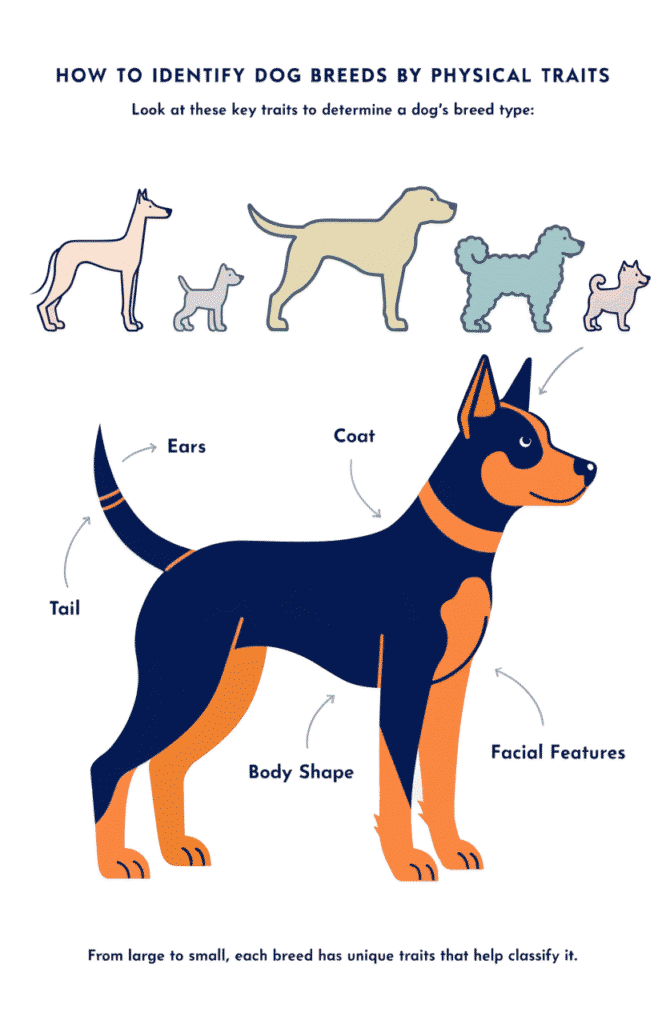
One of the easiest starting points is simply looking at your dog closely. Physical features can give you a lot of clues about their breed background.
2.1 Body Size and Shape
Start with size. Is your dog small, medium, or large? Does it have a lean athletic build or a stocky, heavy frame?
For example, long low-slung bodies with short legs are typical of Dachshunds or Corgis. Tall, slim dogs with deep chests often have Greyhound or Whippet in them. Barrel-chested, wide-headed dogs may carry Bulldog or Mastiff genes.
2.2 Coat Type and Color
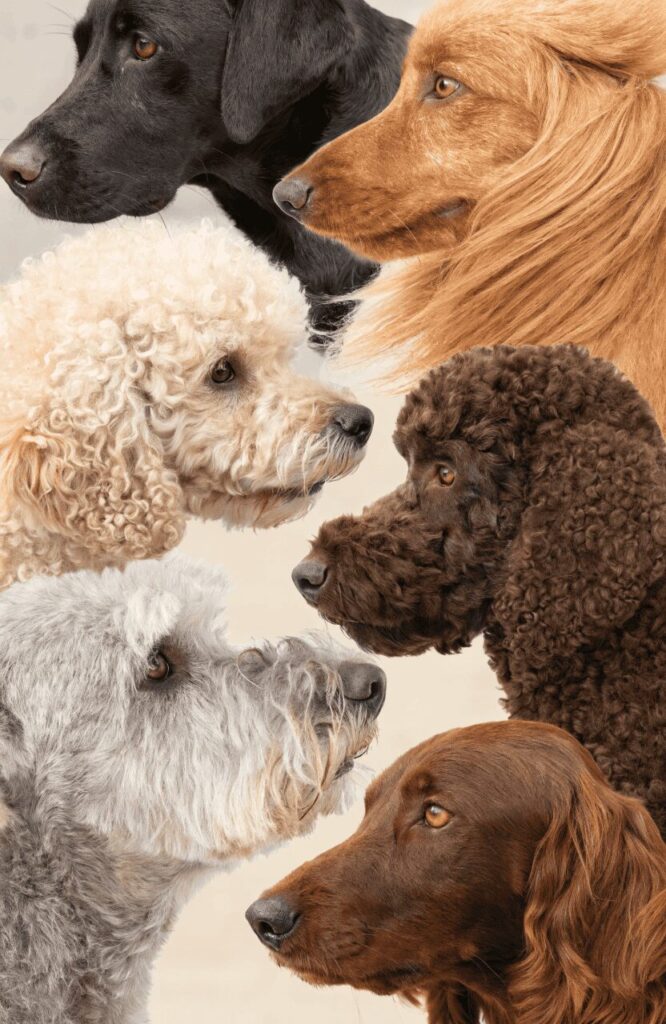
The coat is one of the biggest visual clues.
- Short and smooth coats are common in Beagles, Boxers, and Labradors.
- Long and silky coats point toward Spaniels, Setters, or Collies.
- Curly or wavy coats suggest Poodle ancestry.
- Thick double coats are typical in Huskies, Malamutes, and Chow Chows.
- Wiry or rough coats often indicate Terrier genes.
Color patterns also help. Merle patterns are strongly associated with Australian Shepherds and Border Collies. Black and tan markings appear in Rottweilers, Dobermans, and German Shepherds.
2.3 Ear Shape and Tail
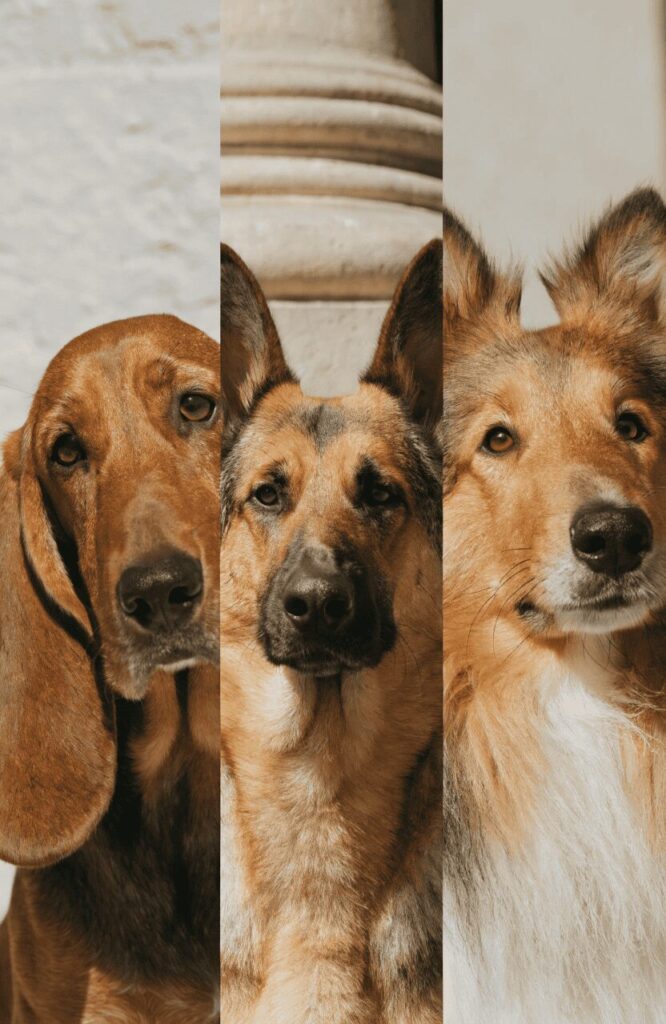
Ear shape is surprisingly breed-specific.
Floppy, long ears are common in Hounds and Spaniels. Erect, pointed ears appear in German Shepherds, Chihuahuas, and Huskies. Semi-erect ears that fold at the tips are typical of Collies and Shelties.
Tails also give clues. Curled tails over the back are seen in Akitas, Basenjis, and Chow Chows. Long feathered tails belong to Setters and Spaniels. Short stubby tails may indicate Bulldog or Australian Shepherd heritage.
2.4 Facial Features
Look at the face carefully. A broad, flat face (called brachycephalic) is the hallmark of Bulldogs, Pugs, and Boxers. Long, narrow snouts are associated with Greyhounds, Whippets, and Collies. Wide skulls with strong jaws often suggest Mastiff or Rottweiler ancestry.
Eye shape and color can help too. Blue eyes are strongly linked to Huskies, Australian Shepherds, and Weimaraners.
3. Use a Dog Breed Identifier App
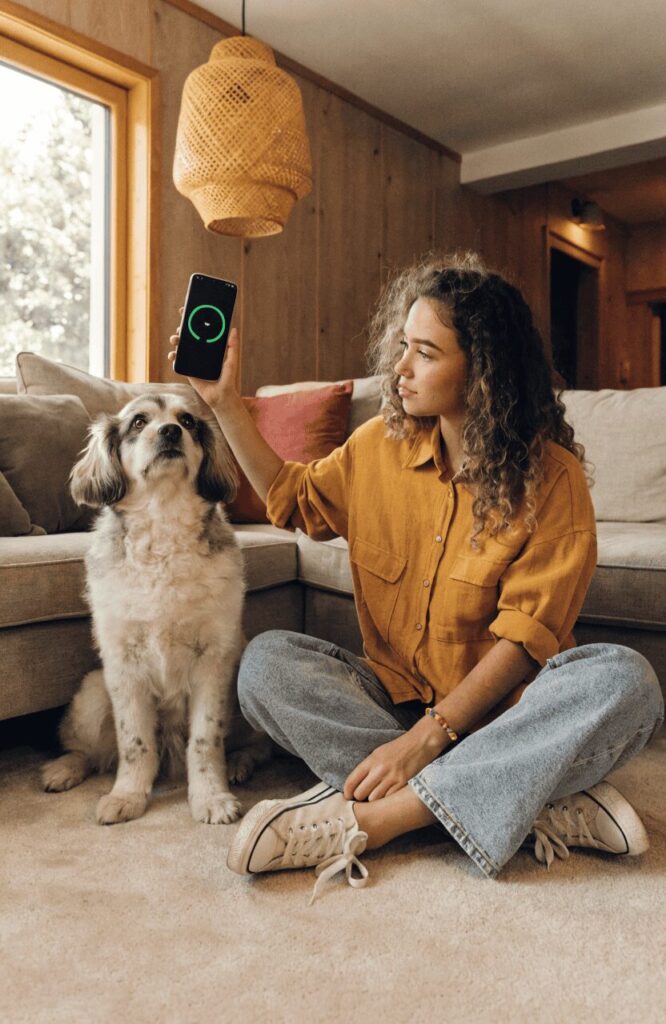
We live in a world where your phone can identify dog breeds in seconds. Several apps use artificial intelligence to analyze your dog’s photo and suggest possible breeds.
Popular dog breed identifier apps include:
- Dog Scanner — One of the most popular apps. You simply point your camera at your dog and it tells you the most likely breeds.
- Microsoft Azure Custom Vision (used in apps like Fetch!) — Uses deep learning to compare your dog’s photo against thousands of breed images.
- iKennel and Pawprint — Other solid options with breed libraries.
These apps are fun and surprisingly accurate for purebreds. For mixed breeds, they give you a breakdown of the most likely breed combinations.
A word of caution: Apps are not 100% accurate. They work best with good lighting, a clear face-on photo, and a dog that stays still long enough for a shot. Think of them as a great starting point, not a definitive answer.
4. DNA Testing — The Most Accurate Way to Know What Breed Your Dog Is
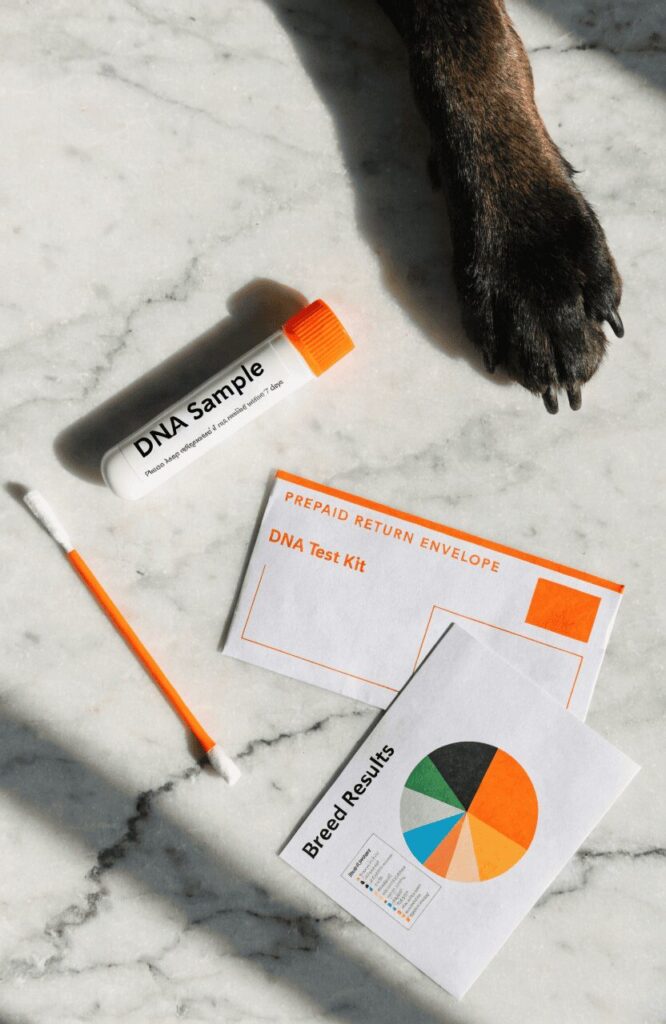
If you want a real, science-backed answer to how to find out what breed your dog is, DNA testing is the gold standard. It is the most reliable method by far.
4.1 How Dog DNA Tests Work
Dog DNA tests work very similarly to human ancestry kits. You order a kit online, swab the inside of your dog’s cheek, and send the sample back to the lab. Within two to four weeks, you receive a full breed breakdown.
The lab compares your dog’s DNA to a massive database of purebred dog genetics. The bigger the database, the more accurate the results.
4.2 Best Dog DNA Test Kits
There are a few well-known companies in this space:
- Embark — Widely considered the most accurate. Tests for over 350 breeds and screens for 200+ genetic health conditions. It’s on the pricier side but worth it.
- Wisdom Panel — Another top choice. Covers 350+ breeds and offers health screening options.
- AncestryDNA for Dogs (via Orivet) — A solid budget option.
According to the American Kennel Club, DNA testing is currently the most definitive way to determine a mixed breed dog’s genetic background.
4.3 What the Results Tell You
DNA results usually show you a percentage breakdown. For example, your dog might be 40% Labrador Retriever, 30% Boxer, 20% German Shepherd, and 10% unknown mixed breed.
Many kits also flag potential genetic health risks. This is extremely useful for your vet. If you’re getting a new puppy and are unsure of its background, understanding these risks early connects directly to your dog’s long-term puppy veterinary needs.
5. Ask Your Veterinarian
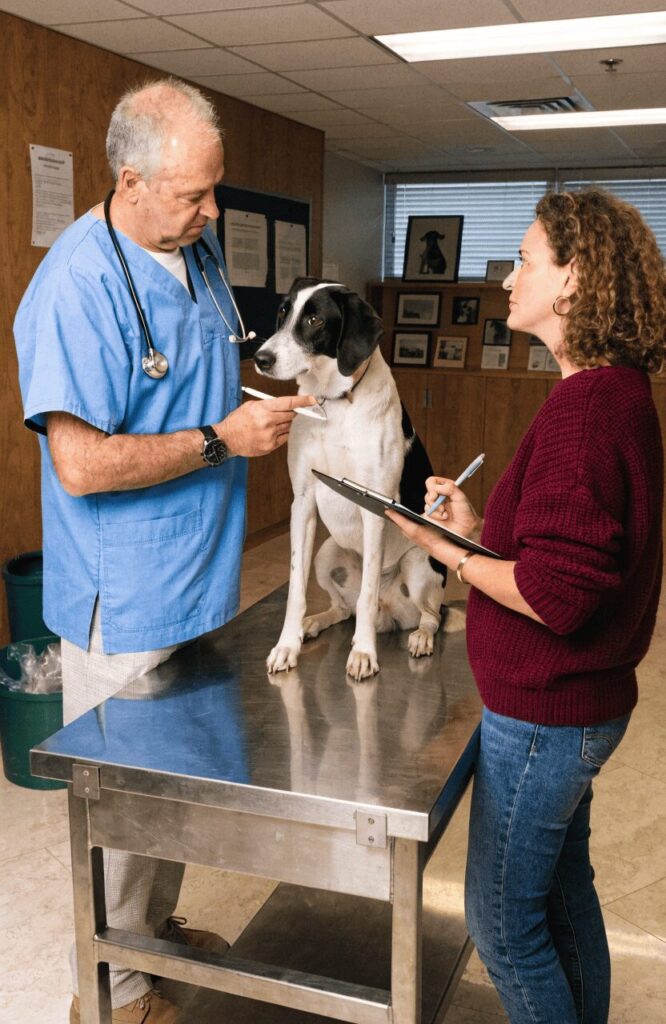
Your vet is one of the most underrated resources when it comes to breed identification. Experienced vets have seen thousands of dogs and can often make a very educated guess just from a physical exam.
During a routine checkup, your vet will assess your dog’s bone structure, body proportions, coat, and other physical markers. While it’s not as precise as DNA testing, a vet’s visual assessment is often surprisingly accurate — especially for common breeds and popular mixes.
Beyond breed guessing, your vet can also link certain physical traits to known health conditions and give you a personalized health plan based on what they observe.
Don’t be shy about asking. Just say, “What breed do you think my dog is?” Most vets enjoy the question and will give you a thoughtful answer.
6. Check Shelter or Breeder Records
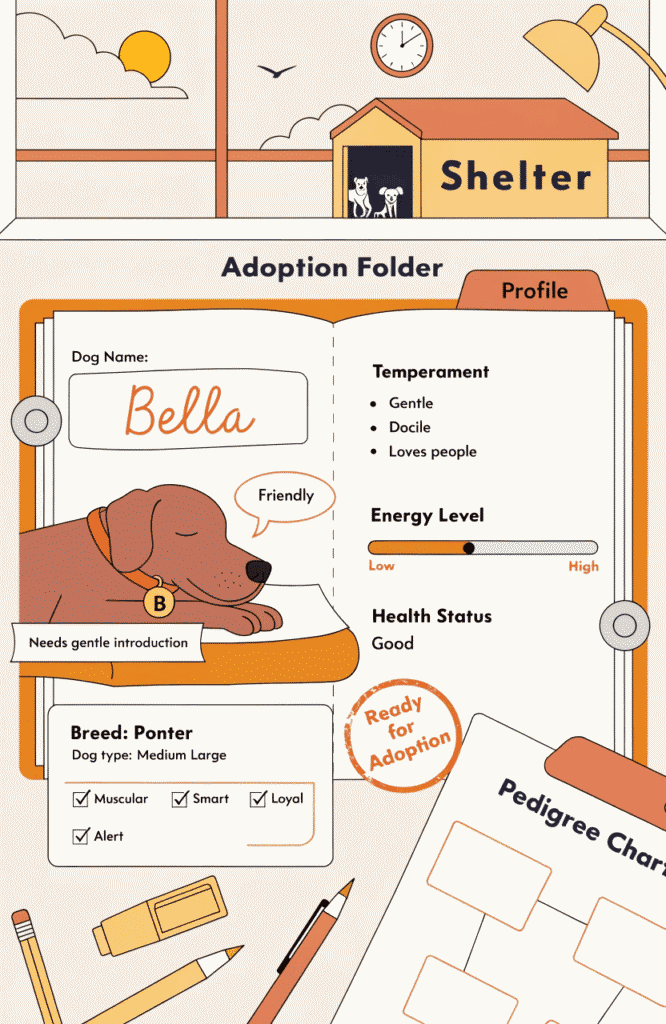
If your dog came from a shelter, rescue organization, or breeder, there may already be paperwork with breed information.
For shelter dogs: When a dog comes in, staff often make a breed guess based on appearance. This note goes into the dog’s file. It’s not always accurate, but it’s a starting point. Some shelters use DNA tests on incoming dogs, so it’s worth asking.
For breeder dogs: If you got your dog from a reputable breeder, you should have received pedigree papers. These documents trace your dog’s lineage back several generations and confirm the breed. If you’re looking for a well-documented purebred, working with established breeders matters — for example, responsible breeders shape the quality of boxer puppies through careful lineage tracking and health testing.
For rescue dogs: International rescue organizations sometimes microchip dogs before transport. Scanning the chip and contacting the original registry may reveal breed information.
7. Compare With Official Breed Standards
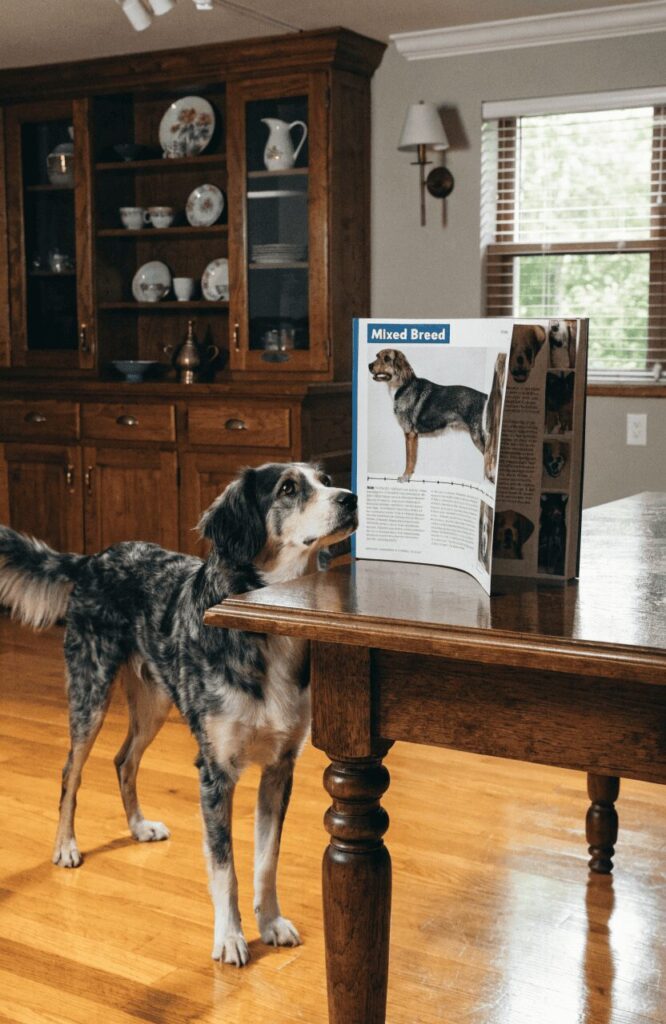
Another method is to compare your dog’s physical features against official breed standards published by major kennel clubs.
The American Kennel Club (AKC) and the United Kennel Club (UKC) maintain detailed descriptions of every recognized breed — including exact measurements, coat types, colors, head shapes, and temperament traits.
You can browse the AKC’s official breed guide to find breeds that closely match your dog’s appearance.
This method works best when your dog appears to be mostly one breed. If your dog is a heavy mix, it becomes much harder to match against a single breed standard. In that case, DNA testing is still your best friend.
Whether you’re trying to identify a tiny dog or a large one, knowing the breed helps you make better choices. Take a look at the best small dog breeds or the best big dog breeds to compare physical traits with what you see in your own pup.
8. Common Mixed Breed Combinations and How to Spot Them
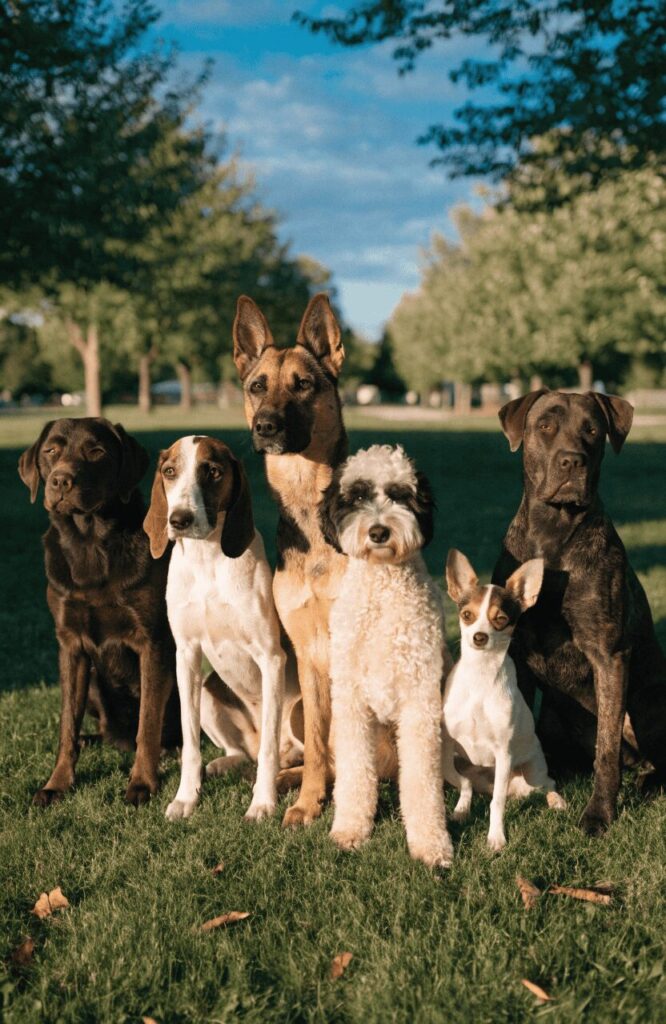
Most dogs in shelters and rescues are mixed breeds. This makes identification trickier, but not impossible. Some mixes are so common that they have their own recognizable look.
Labrador Mix: Labs are one of the most popular breeds in the world, and Lab mixes are everywhere. Signs include a blocky head, thick tail (sometimes called an “otter tail”), and a short dense coat. They’re often friendly, food-motivated, and easy to train.
Pit Bull Mix: “Pit bull” is an umbrella term that includes American Pit Bull Terriers, American Staffordshire Terriers, and Staffordshire Bull Terriers. Signs of pit bull ancestry include a broad head, muscular chest, short coat, and wide-set eyes. Many medium-sized muscular rescue dogs have some pit bull in their DNA.
Hound Mix: Floppy ears, a long nose, a deep chest, and a love of sniffing are classic signs. Beagle and Basset Hound mixes often show these traits strongly.
Shepherd Mix: Upright ears, a lean and athletic body, a bushy tail, and a highly alert expression suggest German Shepherd or Australian Shepherd ancestry. These dogs are often very intelligent and energetic.
Chihuahua Mix: Small size, large round eyes, big ears, and a domed skull suggest Chihuahua genes. Chihuahua mixes can look wildly different depending on the other parent breed.
Poodle Mix (Doodles): Curly or wavy coats combined with a longer snout and lean frame often indicate Poodle ancestry. Goldendoodles (Golden Retriever + Poodle) and Labradoodles (Labrador + Poodle) are among the most popular designer mixes today.
9. How to Know What Breed Your Dog Is — A Quick Checklist
Not sure where to start? Here’s a simple checklist to guide you through the process:
Step 1 — Observe physical traits: Look at size, coat, ears, tail, and face. Write down what you notice.
Step 2 — Use a breed identifier app: Take a clear photo and run it through Dog Scanner or a similar app for a quick first guess.
Step 3 — Check any existing paperwork: Look through adoption papers, shelter records, or breeder documents for breed notes.
Step 4 — Ask your vet: Bring your observations to your next vet visit and ask for their professional opinion.
Step 5 — Compare against breed standards: Use the AKC breed database to match physical traits to known breeds.
Step 6 — Order a DNA test: For the most accurate answer, invest in a reputable DNA kit like Embark or Wisdom Panel.
Following this checklist gives you multiple data points and helps you arrive at the most accurate answer possible — even if your dog turns out to be a unique mix of five different breeds.
Conclusion
Understanding how to find out what breed your dog is can feel like solving a puzzle — and that’s part of what makes it so enjoyable. From studying physical features and using smartphone apps to consulting your vet and ordering a DNA kit, there are more options available today than ever before.
For most dog owners, a combination of visual observation, a vet consultation, and a DNA test gives the clearest picture. If budget is a concern, start with the free methods and save the DNA kit for when you really want a definitive answer.
No matter what breed (or blend of breeds) your dog turns out to be, one thing is certain — they’re uniquely yours. And understanding them a little better only deepens the bond you share.

Izzy is an experienced ranch worker who has a passion for exploring nature and getting up close to wildlife. With her connections to various animal organizations, Izzy is well-versed in animal care and rehabilitation.