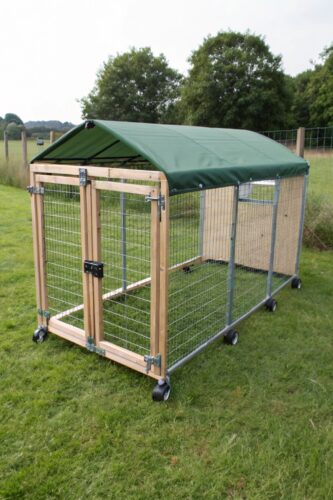
25 Outdoor Dog Kennel Ideas for Every Dog, Yard, and Budget
Your dog deserves more than a leash tied to a tree.
If you have a backyard, you have the opportunity to give your dog a real outdoor space — somewhere safe to run, rest, play, and enjoy fresh air without you having to watch every second. That’s exactly what a well-designed outdoor dog kennel can do.
The right outdoor kennel isn’t just a cage. It’s a dedicated space built around your dog’s needs. Size matters a lot here. Small dogs like Chihuahuas or Shih Tzus can be comfortable in a 6×8 foot run, while large and giant breeds — think German Shepherds, Rottweilers, or Great Danes — need at least a 10×20 foot space to move freely. If you have one of the larger breeds, check out this guide on best big dog breeds to understand their specific exercise and space needs.
Climate matters too. Dogs in hot climates need shade, ventilation, and cool flooring. Dogs in cold climates need insulation, wind protection, and elevated sleeping areas to stay off frozen ground. And if you have more than one dog, the entire layout changes — you may need divided sections, extra space, or separate entry points.
This article covers everything: the best flooring options, 25 creative outdoor dog kennel ideas across every style and budget, must-have add-ons, how to make your kennel look great in your backyard, and a safety checklist to go through before your dog moves in.
Let’s get into it.
Contents
- 25 Outdoor Dog Kennel Ideas
- 1. Classic Chain-Link Run with Privacy Slats
- 2. Rustic Wooden Kennel
- 3. Modern Steel and Wood Design
- 4. Cottage-Style Kennel with a Fenced Porch
- 5. Vertical Garden Kennel
- 6. Gazebo-Style Kennel for Small Dogs
- 7. Luxury Dog Retreat with Shade Canopy
- 8. Multi-Level Play Kennel
- 9. Wooden Pallet DIY Kennel
- 10. Insulated Dog Shelter for Cold Climates
- 11. Modular Expandable Kennel
- 12. Dog Run with Gravel Floor
- 13. Kennel with Built-In Dog Door
- 14. Shaded Kennel with Sail Canopy
- 15. Eco-Friendly Natural Wood Kennel
- 16. Lean-To Kennel Against a Fence or Wall
- 17. Covered Kennel with Full Roof Panel
- 18. Kennel with Agility Features
- 19. Themed Kennel — Barn, Cabin, or Cottage Style
- 20. Dog Lot with Separate Sleeping and Play Zones
- 21. Underground Dig-Proof Kennel
- 22. Portable Pop-Up Kennel
- 23. Kennel with Raised Platform Bed
- 24. Multi-Dog Kennel with Divided Sections
- 25. Backyard Kennel Integrated Into Landscaping
- The Best Flooring Options for an Outdoor Kennel
- Must-Have Add-Ons for Any Outdoor Dog Kennel
- Backyard Dog Kennel Ideas That Actually Look Good
- Safety Checklist Before Your Dog Moves In
- Conclusion
25 Outdoor Dog Kennel Ideas
Here are 25 outdoor dog kennel designs to inspire your build — organized from simple and affordable to elaborate and premium. Each one solves a different problem or suits a different yard, dog, or owner.
1. Classic Chain-Link Run with Privacy Slats

This is the most common outdoor kennel setup and it works well for a reason. A chain-link run is affordable, easy to assemble, and durable enough for heavy-duty daily use. Adding privacy slats — plastic strips woven through the chain link — gives your dog a visual barrier from the street or neighbors.
This reduces barking triggered by passing people, other dogs, or squirrels. It also makes the space feel calmer and more enclosed, which many dogs prefer. Choose slats in a color that blends with your fence or landscaping for a cleaner look.
Best for: Medium to large dogs, budget-conscious owners, renters who need something removable.
2. Rustic Wooden Kennel

A rustic outdoor dog kennel built from pressure-treated wood or cedar has a warmth and charm that chain-link simply can’t match. Think rough-cut timber posts, a wood-framed enclosure with wire mesh panels, and a simple gabled roof for weather protection.
Cedar is especially popular because it’s naturally resistant to rot and insects without the need for chemical treatments — important when your dog is spending time in close contact with the wood. A rustic design fits perfectly in wooded backyards or homes with a farmhouse or cottage aesthetic.
Best for: Design-conscious owners, wooded or rural yards, medium to large dogs.
3. Modern Steel and Wood Design

If your home has a contemporary style, a kennel built from galvanized steel panels with cedar or composite wood accents creates a sleek, architectural look. The steel provides security — even escape artists struggle with heavy-gauge galvanized panels — while the wood softens the appearance.
This type of kennel is often seen with clean horizontal lines, a flat roof overhang, and a minimalist gate latch. It looks intentional rather than thrown-together, which matters if your kennel is visible from the house or street.
Best for: Modern homes, large breeds, owners who want the kennel to be a design feature.
4. Cottage-Style Kennel with a Fenced Porch

Imagine a small enclosed dog house with a shaded porch area out front, all fenced within a run. The dog has a cozy place to sleep inside and a covered porch to sit on during light rain or hot sun without going fully inside.
This two-zone setup is one of the most comfortable arrangements for dogs who live outdoors for extended periods. The porch can be screened, covered with a polycarbonate roof panel, or fitted with a shade sail. Add a raised composite deck floor to the porch area for extra comfort.
Best for: Dogs that spend long hours outside, any climate, medium and large breeds.
5. Vertical Garden Kennel

This is a stunning idea that blends your dog’s outdoor space into your garden. The perimeter of the kennel features vertical garden panels or trellises with climbing plants — think jasmine, climbing roses, or creeping thyme — creating a living wall effect around the enclosure.
The plants provide natural shade, reduce the visual bulk of the kennel structure, and make the whole thing feel like part of the landscape rather than a utilitarian add-on. Make absolutely sure every plant you use is non-toxic to dogs before planting.
Best for: Garden-focused yards, design-conscious owners, warmer climates.
6. Gazebo-Style Kennel for Small Dogs

A six-sided gazebo-shaped kennel made from metal panels with a UV-resistant fabric roof is a beautiful solution for small dog breeds. It’s easy to assemble, light enough to reposition, and gives your small dog a protected, shaded outdoor area that looks elegant on a patio or lawn.
This style works especially well for calm, less active small dogs. It’s not escape-proof enough for very determined diggers or climbers, so it’s best suited to dogs you can trust to stay put.
Best for: Small breeds, patio or deck use, occasional supervised outdoor time.
7. Luxury Dog Retreat with Shade Canopy

For owners who want to give their dog the full resort experience, a luxury kennel combines a spacious run, an insulated dog house, a mounted shade canopy, and elevated feeding and water stations all in one setup.
Some versions include a small splash pool for cooling off in summer, rubberized flooring throughout, and landscape lighting around the perimeter. It’s the most expensive option on this list, but for a dog that lives primarily outdoors, it’s genuinely one of the kindest investments you can make.
Best for: Dogs that live outside full-time, large properties, any breed that loves space.
8. Multi-Level Play Kennel

Active breeds like Border Collies, Australian Shepherds, and Vizslas need mental and physical stimulation even in their kennel. A multi-level design adds platforms at different heights connected by ramps, giving the dog something to climb, explore, and survey from above.
Upper platforms can double as shaded resting spots if you add a roof over them. The ramps should be wide, non-slip, and gently sloped — no steeper than a 1:4 rise ratio — to be safe for all ages and fitness levels.
Best for: High-energy breeds, large kennels, dogs prone to boredom.
9. Wooden Pallet DIY Kennel

One of the most affordable backyard dog kennel ideas is building a basic enclosure using reclaimed wooden pallets. Pallets can form walls, a simple lean-to roof, and even a raised floor platform. Finished with a coat of pet-safe exterior paint and some wire mesh for ventilation, they look far better than you’d expect.
The total cost for a small to medium kennel can be under $100 if you source pallets for free from hardware stores, furniture warehouses, or construction sites. Always inspect pallets for nails, splinters, and chemical treatment stamps — avoid any marked with “MB” (methyl bromide).
Best for: Budget DIY builders, small to medium dogs, temporary setups.
10. Insulated Dog Shelter for Cold Climates

In cold-weather regions, the shelter inside the kennel needs serious insulation. A well-built cold-climate dog house uses rigid foam insulation inside the walls and ceiling, a raised floor to prevent ground cold transfer, and a door flap to retain warmth while still allowing easy entry and exit.
The kennel run itself should have wind barriers on the prevailing wind side — solid panels, plywood sheeting, or thick privacy slats. Add a thick layer of straw inside the shelter in winter for extra warmth. Straw traps air better than blankets and doesn’t stay wet as long.
Best for: Northern climates, winter use, outdoor dogs in cold regions.
11. Modular Expandable Kennel
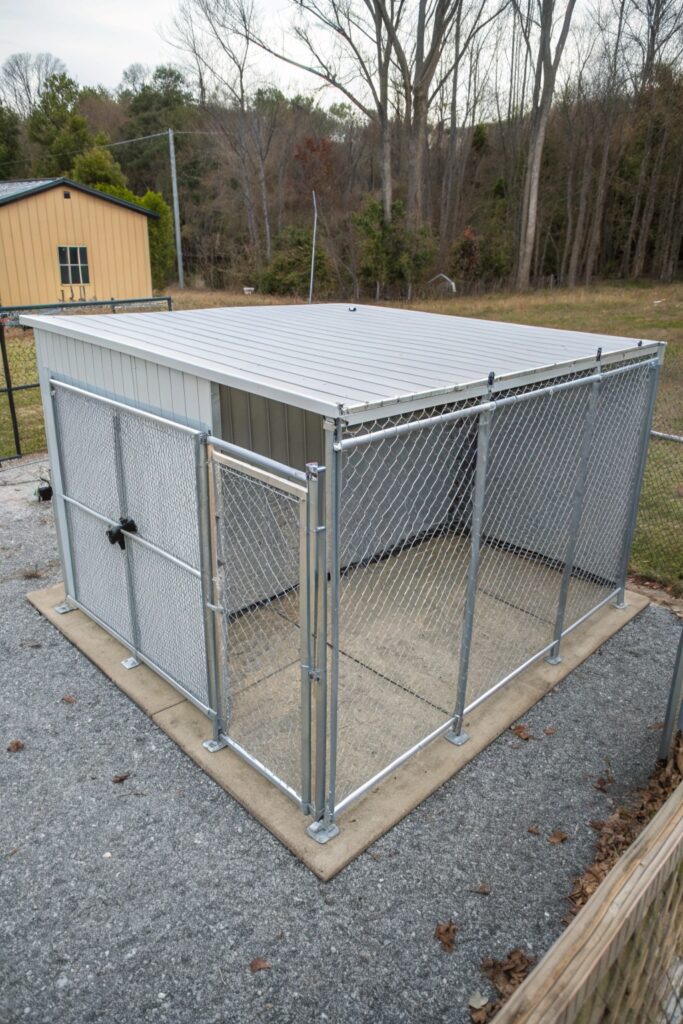
Modular kennels are built from interlocking panels that can be reconfigured as your needs change. Start with a basic 8×8 enclosure and add panels to expand to a 10×20 run whenever you’re ready. This flexibility makes them ideal for growing dogs, households expecting to add another dog, or owners who aren’t sure of the final size they need.
Most modular systems come in galvanized steel or powder-coated aluminum and are available from specialty pet suppliers. They’re more expensive than chain-link per square foot, but the ability to reconfigure without starting over makes them worth it for many owners.
Best for: Growing households, multi-dog homes, anyone who might want to expand later.
12. Dog Run with Gravel Floor

A simple gravel-floored dog run is one of the most practical everyday setups you can build. Lay down a 4-inch base of compacted crushed stone, top with 2–3 inches of pea gravel, and edge it with treated timber or steel edging to keep the gravel contained.
The run drains almost instantly after rain, stays relatively clean, and costs very little per square foot. Hose it down weekly and rake it every few days to keep it tidy. Replenish the top layer of pea gravel once a year.
Best for: Wet climates, large dogs, low-maintenance owners.
13. Kennel with Built-In Dog Door

Connecting the kennel run directly to the house or garage via a dog door gives your pet the freedom to go outside on their own schedule without you having to open and close doors all day. The kennel acts as a safe, enclosed outdoor room attached to the house.
The dog door itself should be weatherstripped, insulated in cold climates, and sized correctly for your dog — they should be able to pass through without crouching uncomfortably. A dog room in the garage can be connected to an outdoor run this way as a natural extension of their indoor space.
Best for: Busy owners, dogs that love indoor-outdoor freedom, attached garages or ground-floor homes.
14. Shaded Kennel with Sail Canopy

A sail canopy — a triangular or rectangular piece of UV-blocking fabric stretched between anchor points — is one of the cheapest and most effective ways to add shade to an existing kennel. They cost $30–$80, install in minutes, and can be removed and stored in winter.
Position the canopy to block the afternoon sun, which is the most intense period of heat in most climates. Combine with a mesh-sided kennel to maximize airflow while keeping the sun off your dog.
Best for: Hot climates, summer use, adding shade to an existing kennel.
15. Eco-Friendly Natural Wood Kennel

An eco-friendly kennel uses sustainably sourced or FSC-certified cedar or pine, non-toxic exterior finishes, and natural materials throughout. No pressure-treated lumber (which can leach chemicals), no synthetic fabrics, no plastic components.
The aesthetic is warm and natural — raw wood tones, simple joinery, a living moss or sedum roof if you want to go all in. It biodegrades at end of life rather than ending up in landfill. A small but meaningful choice for environmentally conscious dog owners.
Best for: Eco-conscious owners, gardens with a naturalistic design, any dog breed.
16. Lean-To Kennel Against a Fence or Wall

A lean-to design attaches one side of the kennel directly to an existing fence or exterior wall, reducing the materials needed and making the structure more stable. The wall provides a natural wind barrier on one side and the sloped lean-to roof channels rain away from the enclosure.
This is a great small-backyard solution because it uses space that’s often wasted along a fence line. It’s also faster to build than a freestanding structure since one wall already exists.
Best for: Small yards, DIY builders, medium dogs.
17. Covered Kennel with Full Roof Panel

Rather than leaving the run open to the sky or relying on a canopy, a fully roofed kennel uses rigid polycarbonate sheeting, corrugated metal, or wooden roofing across the entire run. The dog stays dry in rain, protected from hail, and shaded year-round.
This is especially important in climates with heavy rainfall or intense summer sun. Clear polycarbonate lets natural light through while blocking UV rays and rain — a strong choice if you want the kennel to feel open without exposing your dog to the elements.
Best for: Rainy climates, year-round outdoor use, any dog size.
18. Kennel with Agility Features
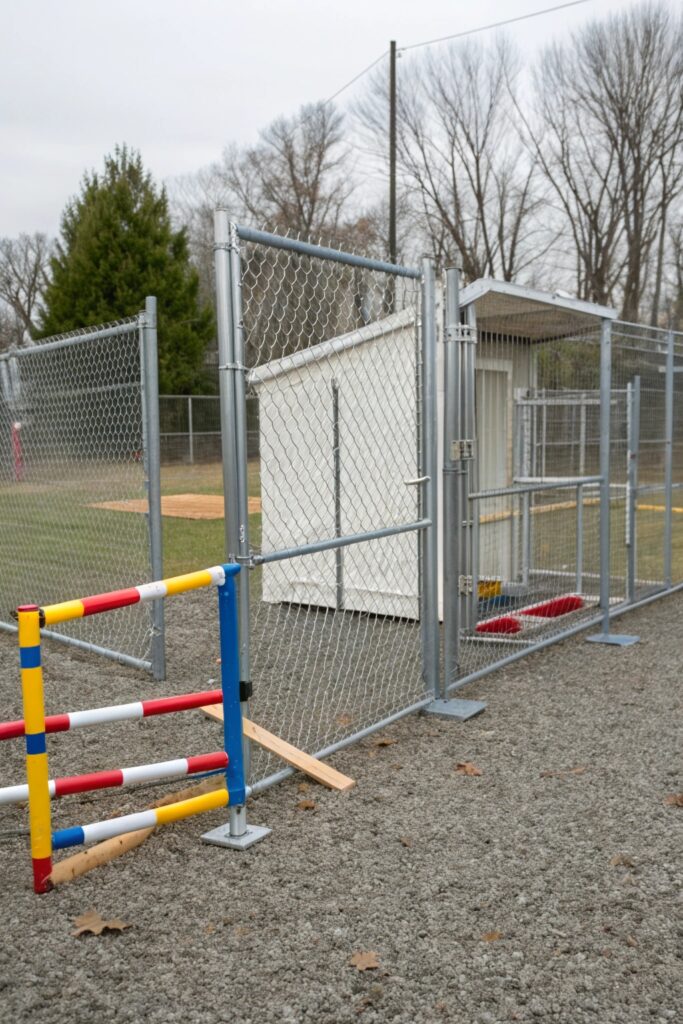
Combine the kennel run with built-in enrichment features — a weave pole, a low jump bar, a tunnel entrance, and a raised A-frame ramp. This turns the kennel into an activity zone rather than just a containment space.
You don’t need a full competition agility course. Even two or three obstacles give an active dog something to do, reduce boredom-related behaviors like barking or digging, and provide light exercise throughout the day.
Best for: Working breeds, high-energy dogs, large kennel spaces.
19. Themed Kennel — Barn, Cabin, or Cottage Style

Give your dog’s outdoor space some personality with a themed design. A barn-style kennel uses red-painted board-and-batten siding with white trim and a gambrel roof. A cabin theme uses log-effect posts and a stone-effect base. A cottage design features a pitched roof, window boxes, and a Dutch door.
The theme doesn’t have to be elaborate — even a single design element like a consistent paint color, a distinctive roof shape, or decorative trim can transform a plain kennel into something that feels intentional and charming.
Best for: Design-focused owners, visible backyard kennels, any dog breed.
20. Dog Lot with Separate Sleeping and Play Zones
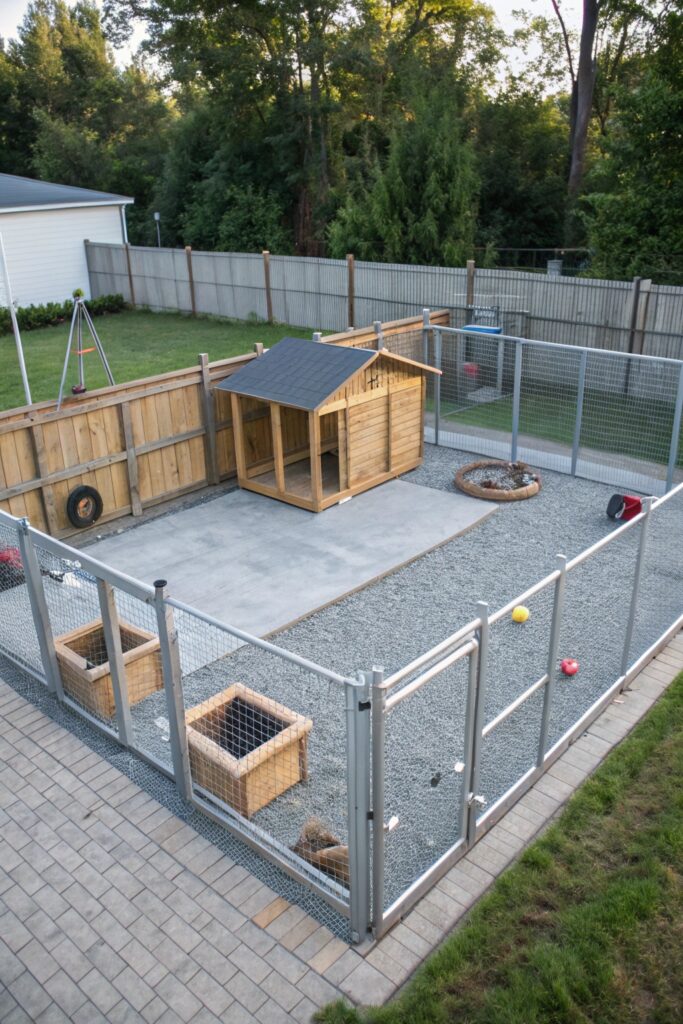
A dog lot is a larger outdoor area — typically 20×20 feet or more — divided into distinct zones. The sleeping zone contains an insulated dog house with comfortable bedding. The play zone has open space, toys, and enrichment features. A small bathroom zone in one corner uses gravel or a specific substrate to encourage elimination in one spot.
This zoned approach is especially valuable for dogs that spend significant time outdoors. It mirrors the natural instinct dogs have to separate resting, playing, and toileting areas.
Best for: Large properties, dogs home alone for long periods, working dog breeds.
21. Underground Dig-Proof Kennel
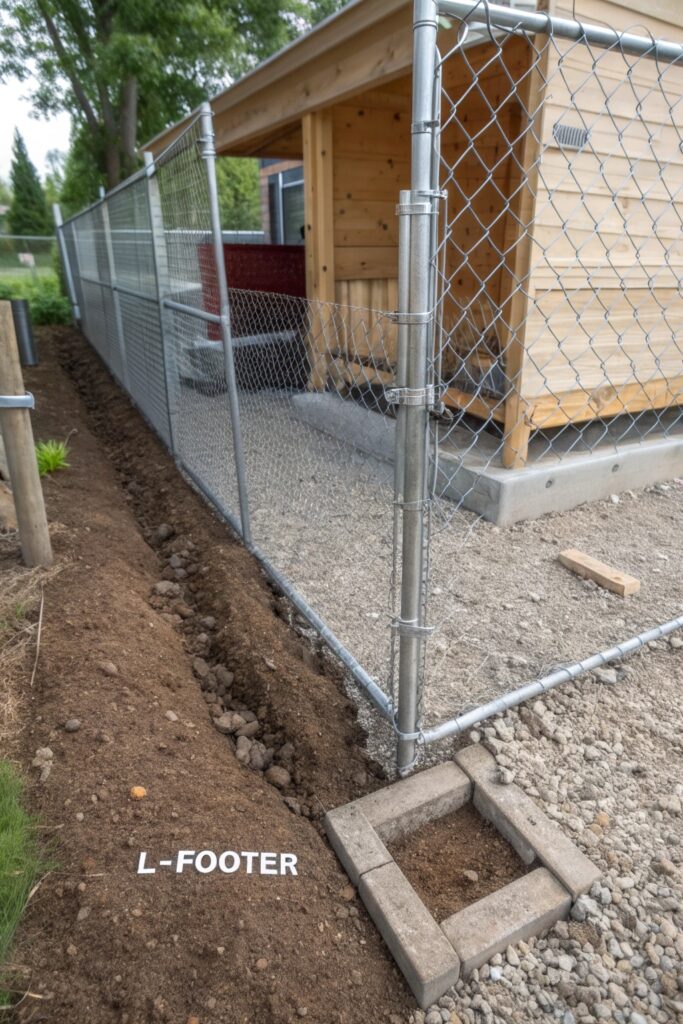
Some dogs are dedicated escape artists who tunnel under fencing. The solution is an L-shaped footer — a strip of wire mesh or concrete that extends 12–18 inches horizontally underground around the perimeter of the kennel, then turns and lies flat under the soil.
When the dog digs down and hits the barrier, they can’t figure out how to get past it. This method is far more effective than simply burying the fence deeper, because it stops the dog before they even reach the vertical fence line.
Best for: Digger breeds like Huskies, Terriers, Dachshunds; any determined escape artist.
22. Portable Pop-Up Kennel

A portable kennel uses folding metal or plastic-coated wire panels that set up and break down in minutes with no tools. They’re ideal for travel, camping, visits to relatives, or temporary outdoor use at home.
They’re not suitable for unsupervised long-term outdoor use — they’re not robust enough for escape-prone dogs and don’t withstand serious weather. But for occasional supervised outdoor time in a new environment, they offer convenience that fixed kennels can’t match.
Best for: Travel, camping, temporary outdoor use, small to medium dogs.
23. Kennel with Raised Platform Bed

A raised platform bed — essentially a dog cot built into the kennel — lifts your dog off the ground, away from cold, damp, mud, and insects. Even in warm climates, getting the dog off the ground surface improves comfort significantly.
The platform can be as simple as a pressure-treated timber frame with a sheet of marine plywood on top, or as polished as a commercially available elevated dog cot with a mesh fabric sleeping surface. Either way, it’s one of the single highest-impact comfort improvements you can add to any kennel.
Best for: All climates, all dog breeds, any kennel style.
24. Multi-Dog Kennel with Divided Sections

If you have two or more dogs, a divided kennel gives each dog their own space while keeping them close enough to see and smell each other. A central dividing panel — solid or mesh — runs down the middle of the kennel, with separate gates and sleeping areas for each dog.
This setup is critical if you have dogs that don’t always get along, dogs of very different sizes, or a new dog being introduced gradually to the household. Even dogs that love each other benefit from having their own retreat within a shared space.
Best for: Multi-dog households, mixed-size pairs, dogs being introduced to each other.
25. Backyard Kennel Integrated Into Landscaping
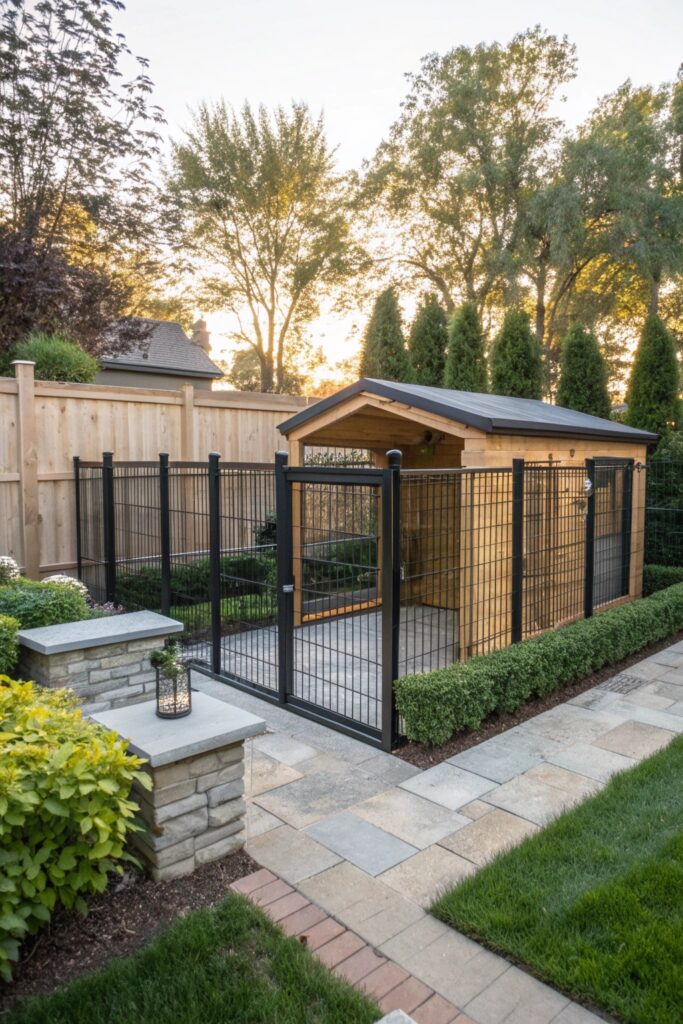
The best outdoor dog kennel ideas are the ones that don’t look like kennels at all. An integrated kennel uses the same fencing material as your yard perimeter, is framed with matching garden beds, and uses a gate style that blends with the overall garden design.
Planting low shrubs along the outside of the kennel perimeter, using the same stone or timber edging as the rest of your garden, and matching the kennel roof color to your house trim are all small details that make a big collective difference. The kennel stops being an eyesore and starts being part of the landscape.
Best for: Design-conscious homeowners, visible backyard locations, any dog size.
The Best Flooring Options for an Outdoor Kennel
Most people focus on fencing and forget about the floor. That’s a mistake. The ground your dog walks, sleeps, and plays on every day affects their joint health, hygiene, and overall comfort more than almost any other factor.
Here are the five best flooring options for outdoor kennels:
Pea Gravel is one of the most popular choices and for good reason. It drains extremely well, stays relatively cool in summer, and is easy to rake clean. The small rounded stones are gentle on paws. The downside is that some dogs love to dig in it or scatter it outside the kennel. Expect to top it up once or twice a year.
Concrete is durable, easy to hose down, and escape-proof — dogs can’t dig through it. It’s the go-to for serious, permanent kennels. The problem is that it gets very hot in summer, very cold in winter, and is hard on joints over time. If you use concrete, always add rubber mats or a raised platform bed to give your dog somewhere softer to lie.
Rubber Pavers give you the durability of a hard surface with better comfort underfoot. They absorb impact, don’t get as hot as concrete, and are easy to pull up and clean. They cost more than gravel but less than a full concrete pour. A solid mid-range choice.
Artificial Turf looks great and is soft on paws. Dogs love it because it feels like grass. The big drawback is odor — urine soaks into the backing and can smell badly if not cleaned regularly. Look for turf specifically designed for pets with antimicrobial backing and good drainage holes.
Compacted Decomposed Granite is an underrated option. It packs down firm like a path, drains well, and looks natural. It’s inexpensive, easy to install yourself, and comfortable for most dogs. It can compact unevenly over time, but a quick rake fixes that.
Quick Comparison:
| Flooring | Drainage | Comfort | Cost | Cleaning |
|---|---|---|---|---|
| Pea Gravel | Excellent | Good | Low | Easy |
| Concrete | Poor | Low | Medium | Very Easy |
| Rubber Pavers | Good | Very Good | Medium-High | Easy |
| Artificial Turf | Good | Excellent | Medium | Moderate |
| Decomposed Granite | Very Good | Good | Low | Easy |
Whatever flooring you choose, avoid bare dirt. It turns to mud in rain, becomes dusty in heat, allows digging escapes, and is nearly impossible to keep sanitary.
Must-Have Add-Ons for Any Outdoor Dog Kennel
The kennel structure is just the start. These add-ons make the difference between a basic enclosure and a space your dog genuinely loves spending time in.
Water and Feeding Stations
Fresh water should always be available in the kennel. Mount a spill-proof water bowl to the fence at your dog’s shoulder height to reduce tipping and contamination. A wall-mounted dog feeding station keeps the feeding area tidy and off the ground where ants and insects can’t reach it as easily. If you live somewhere that freezes, invest in a heated water bowl for winter use.
Weatherproof Shelter Insert
Even if your kennel has a shade canopy or full roof, a dedicated shelter — a proper enclosed dog house inside the run — gives your dog somewhere to fully retreat from wind, rain, cold, and heat. It should be large enough for the dog to stand, turn around, and lie flat, but not so large that their body heat can’t warm it in winter.
Enrichment: Toys and a Digging Box
Boredom is the root cause of most kennel behavior problems — excessive barking, destructive chewing, and escape attempts. A designated digging box (a small raised sandbox or gravel pit in one corner) gives digger breeds a legal outlet. Rotate toys every few days to keep things interesting.
Lighting for Evening Use
Solar-powered stake lights around the kennel perimeter or a single low-voltage fixture mounted to the shelter roof let you check on your dog at night without needing a flashlight. They also make the kennel feel less isolating for dogs who are uneasy in the dark.
Chew-Proof Entry Latch
Standard spring latches are easy for clever dogs to figure out. Use a double-action latch — one that requires two separate movements to open — or a padlock for persistent escape artists. The gate itself should open inward into the kennel so the dog can’t use their body weight to push it open.
Adding a good dog washing station nearby also makes post-kennel cleanup much faster, especially if you’re using gravel or dirt flooring.
Backyard Dog Kennel Ideas That Actually Look Good
One of the most common hesitations people have about building an outdoor kennel is that it will make their yard look like a dog facility rather than a home. That doesn’t have to be the case.
The key is treating the kennel as a garden feature rather than a utility structure. Here’s how:
Match Your Materials
Use the same timber species, paint color, or metal finish as existing elements in your yard. If your deck is cedar, build the kennel from cedar. If your fence is black powder-coated steel, use the same for the kennel panels. Consistency in materials makes the kennel feel like it belongs.
Frame It With Plants
Low-growing ornamental grasses, boxwood hedges, or flowering shrubs planted along the outside of the kennel perimeter soften the structure and integrate it into the garden. Keep plants non-toxic and set them far enough back that your dog can’t reach them from inside.
Use Color Thoughtfully
A kennel painted to match your home’s trim color, garage door, or fence instantly feels more deliberate. Avoid the default galvanized silver of chain-link if aesthetics matter to you — a coat of matte black or forest green spray paint transforms the look for very little cost.
Consider the View From the House
Think about where you’ll see the kennel most often — from the kitchen window, the back porch, the patio. Position and design it with that viewpoint in mind. A kennel that looks good from your most-used vantage point makes the whole yard feel better.
For more ideas on designing dedicated dog spaces that look intentional, explore these smart dog room ideas and dog room in garage concepts that can inspire your outdoor build.
Safety Checklist Before Your Dog Moves In
Before your dog spends their first night or full day in the new kennel, go through this checklist carefully. A few minutes of inspection now can prevent a serious problem later.
Check for Toxic Plants Nearby
Walk the perimeter and identify every plant within reach of the kennel — including anything your dog could reach by sticking a paw or snout through the fence. Common toxic plants include azaleas, oleander, sago palm, foxglove, and yew. Remove them or relocate the kennel if needed.
Inspect All Wire Edges and Joints
Run your hand along every edge of wire mesh, panel join, and cut end. Any sharp point or protruding wire can cause a nasty cut, especially on paws, noses, and ears. Use wire edge caps or bend sharp ends back with pliers before the dog enters.
Plan for Heat Stroke
Even with a shade canopy, a kennel can become dangerously hot in summer if ventilation is poor. Make sure at least two sides of the kennel have open mesh (not solid panels) to allow cross-ventilation. Always provide cool fresh water and never leave your dog in a fully enclosed, poorly ventilated kennel during the hottest part of the day.
Escape-Proof the Perimeter
Get down low and look at the kennel from your dog’s perspective. Check for gaps under gates, spaces between panels, and any section of fencing that bows outward under pressure. If your dog is a jumper, the kennel should be covered or at least 6 feet tall. If they’re a digger, install the underground L-footer described in idea 2.21 before use.
Check Gate Latches Twice
The gate is always the weakest point. Test it by shaking it hard — does it hold? Can you open it with one hand while the dog is jumping on it? Upgrade the latch if there’s any doubt.
Know Your HOA and Permit Rules
Permanent outdoor structures — anything with a concrete footer, a fixed roof, or over a certain square footage — may require a building permit or HOA approval in your area. Check before you build, not after. Requirements vary widely by location, so a quick call to your local building department takes five minutes and can save you a forced teardown.
Conclusion
The right outdoor dog kennel doesn’t have to be the most expensive or the most elaborate. It just has to suit your dog’s size, your local climate, your available space, and your budget.
If you’re starting from scratch, focus on two things first: flooring and shelter. Get those right — good drainage underfoot and a proper weatherproof retreat inside the run — and everything else is an upgrade. From there, you can add privacy slats, shade canopies, enrichment features, and landscaping over time.
Whether you’re drawn to a rustic wooden kennel that disappears into your garden, a modular steel system that grows with your needs, or a simple DIY pallet build that you can finish in a weekend for under $100, there’s an outdoor kennel idea on this list that fits your life.
Your dog spends a lot of time outdoors. Make that space count.

Izzy is an experienced ranch worker who has a passion for exploring nature and getting up close to wildlife. With her connections to various animal organizations, Izzy is well-versed in animal care and rehabilitation.