
What Are the Best Dog Kennel Chicken Coop Ideas for Small Backyards
If you’ve ever looked at an old dog kennel sitting in your backyard and thought, “I could do something with that,” you’re not alone. Thousands of backyard farmers and homesteaders are turning unused dog kennels into fully functional chicken coops — and for good reason.
Dog kennel chicken coop ideas are growing in popularity because they offer a smart, budget-friendly way to house chickens without starting from scratch. A basic dog kennel already gives you a strong frame, a fenced enclosure, and often a roof panel — everything you need as a solid starting point.
Whether you’re a first-time chicken keeper or just looking to expand your flock’s space, this guide covers 10 creative ideas, practical tips, and everything you need to know to make it work.
Contents
- 1. 10 Creative Dog Kennel Chicken Coop Ideas
- 1.1 Simple Chain-Link Kennel Conversion
- 1.2 Covered Run with Attached Coop Box
- 1.3 Two-Story Design (Sleeping Loft Above, Run Below)
- 1.4 Kennel with Hardware Cloth Upgrade
- 1.5 Portable/Movable Tractor-Style Kennel Coop
- 1.6 Divided Kennel for Dogs and Chickens
- 1.7 Wooden Kennel Coop Combo with Painted Finish
- 1.8 Urban/Small-Space Kennel Coop
- 1.9 Repurposed Large Wire Crate Coop
- 1.10 Greenhouse-Style Covered Kennel Coop
- 2. Why Convert a Dog Kennel Into a Chicken Coop?
- 3. Key Differences Between a Dog Kennel and a Chicken Coop
- 4. What You Need to Convert a Dog Kennel Into a Chicken Coop
- 5. How to Predator-Proof Your Dog Kennel Chicken Coop
- 6. Nesting Boxes and Roosting Bars: What Chickens Actually Need
- 7. Tips for Keeping Chickens and Dogs Together
- 8. Common Mistakes to Avoid
- Conclusion
1. 10 Creative Dog Kennel Chicken Coop Ideas
1.1 Simple Chain-Link Kennel Conversion
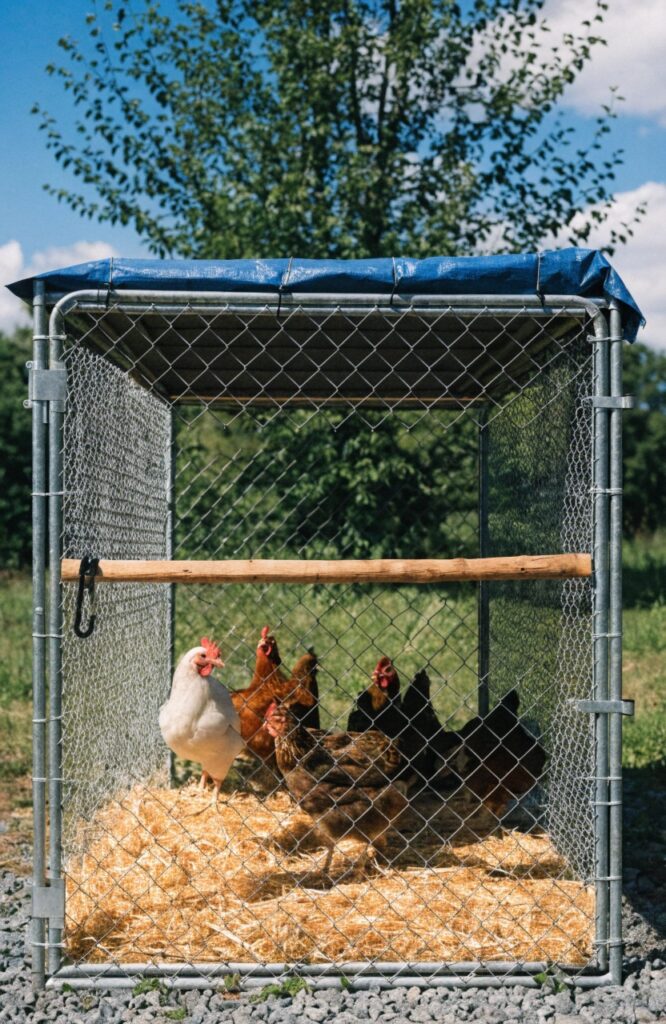
This is the most beginner-friendly option. Take a standard chain-link dog kennel — the kind you’d find at any hardware or pet store — and transform it into a basic chicken run.
All you need to do is:
- Add a small wooden or plastic nesting box inside
- Install a simple roosting bar made from a wooden dowel or tree branch
- Cover the top with a tarp or corrugated metal panel to keep out rain
The chain-link sides already provide good airflow, which is important for chicken health. The main upgrade needed is lining the lower half with hardware cloth to block small predators.
This is a great starter option if you’re on a tight budget or just testing out backyard chicken keeping.
1.2 Covered Run with Attached Coop Box

This idea takes things a step further. You keep the dog kennel as the outdoor run (the area where chickens roam during the day) and attach a small, enclosed wooden box on one side as the sleeping and nesting area.
The coop box should be:
- Elevated off the ground by at least 12 inches
- Fitted with a small entry ramp
- Insulated if you live in a cold climate
- Ventilated with small screened openings near the top
This design gives chickens the best of both worlds — a protected indoor space at night and a spacious outdoor area during the day.
1.3 Two-Story Design (Sleeping Loft Above, Run Below)

If you’re comfortable with basic woodworking, this is one of the most efficient dog kennel chicken coop ideas available.
The kennel frame becomes the lower level — the daytime run. On top of that, you build a raised wooden sleeping loft where chickens roost and lay eggs. A ramp or ladder connects both levels.
This design works especially well for larger kennels (10×10 feet or bigger). It maximizes vertical space instead of footprint, which is perfect for small backyards.
1.4 Kennel with Hardware Cloth Upgrade
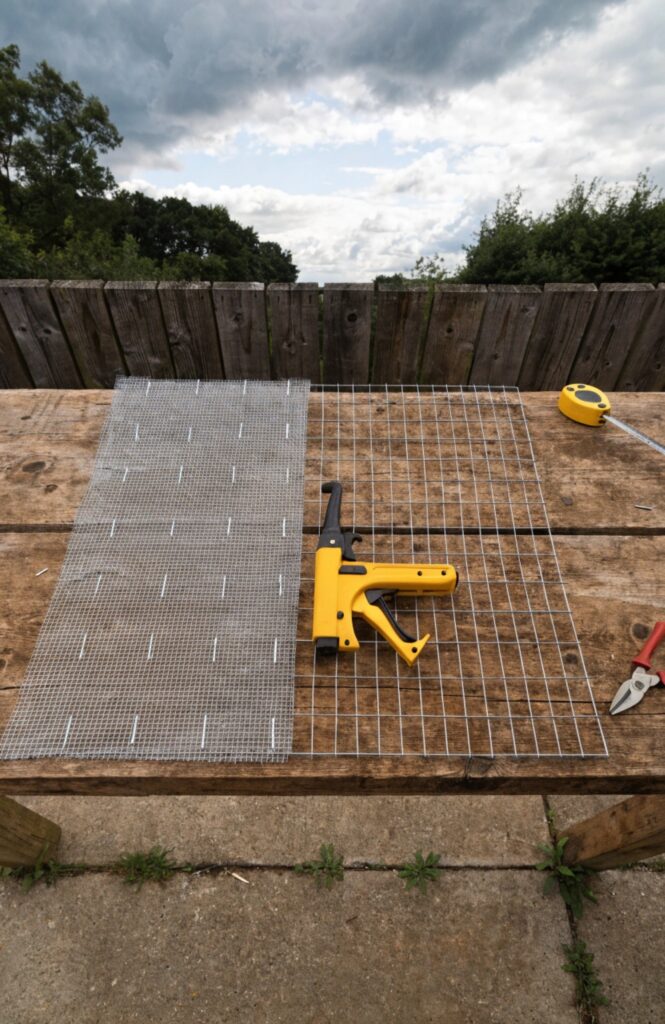
Many dog kennels come with chain-link or welded wire fencing. While that’s fine for dogs, it leaves gaps that are large enough for weasels, rats, and snakes to squeeze through.
The fix is simple: line the entire kennel with half-inch hardware cloth. Attach it with zip ties or staples over the existing fencing.
This upgrade alone dramatically improves the safety of your dog kennel chicken coop. It’s one of the most important modifications you can make, and it doesn’t cost much.
1.5 Portable/Movable Tractor-Style Kennel Coop

A “chicken tractor” is a movable coop that lets your chickens graze on fresh grass as you move it around the yard. You can create one using a smaller, lighter dog kennel.
Add wheels or handles to the bottom frame so it’s easy to drag or roll. Move it every few days so chickens always have fresh ground to scratch.
The benefits include:
- Natural pest control (chickens eat bugs)
- Free fertilizing of your lawn
- Happier, healthier chickens with access to fresh vegetation
This works best with lightweight panel kennels rather than heavy welded-wire ones.
1.6 Divided Kennel for Dogs and Chickens

Yes, you can house both animals in the same kennel — if you do it right.
Use a divider panel (wire mesh or solid wood) to split the kennel into two separate zones: one for your dog and one for your chickens. Make sure the divider is secure and tall enough that neither animal can jump over or push through.
This setup works best when your dog is calm and not prey-driven. It saves space and lets both animals get used to each other over time. For tips on training your dog to behave around other animals, check out this guide on proactivity vs. passivity in dog training.
1.7 Wooden Kennel Coop Combo with Painted Finish

If you care about curb appeal, this idea is for you. Take a wooden dog kennel or build a wooden frame around an existing metal one, then paint or stain it to match your home or garden aesthetic.
Add flower boxes under the windows, decorative trim, or a barn-red paint job. Your chicken coop can look charming rather than like a thrown-together backyard project.
Functional upgrades like nesting boxes, roosting bars, and a proper latch system can all be hidden behind the clean exterior. This works well for suburban backyards where aesthetics matter.
1.8 Urban/Small-Space Kennel Coop

Live in the city or have a tiny backyard? A compact dog kennel (4×4 or 4×8 feet) can comfortably house 2-4 chickens if designed efficiently.
Key tips for small-space coops:
- Go vertical — use wall-mounted nesting boxes to save floor space
- Use a droppings board under the roosting bar to make cleaning faster
- Keep the exterior tidy so it doesn’t bother neighbors
Check local ordinances before keeping chickens in urban areas. Many cities allow hens but not roosters.
1.9 Repurposed Large Wire Crate Coop

Those heavy-duty XL wire dog crates — the ones used for large breeds like Great Danes — can be repurposed into a small chicken coop for just 2-3 birds.
Place the crate inside a sheltered area like a garage corner or covered porch. Line it with a plastic tray at the bottom for easy cleanup, add a small nesting box, and you’ve got a simple coop at almost no cost.
This is ideal for people who want to start small before investing in something bigger.
1.10 Greenhouse-Style Covered Kennel Coop

This one is as functional as it is eye-catching. Cover your dog kennel with clear or translucent polycarbonate panels to create a greenhouse-style enclosure.
The clear panels let in natural sunlight (which chickens need for egg production) while keeping out rain, wind, and predators. You can even grow herbs or greens inside the covered area for the chickens to peck at.
This design works particularly well in rainy climates where an open-top run would leave chickens cold and wet.
2. Why Convert a Dog Kennel Into a Chicken Coop?
There are several great reasons why this approach is becoming so popular among backyard farmers.
It saves money. A purpose-built chicken coop can cost anywhere from $300 to over $1,000. A used dog kennel, on the other hand, can often be found for $50-$150 on marketplace apps or at yard sales. Even adding all the necessary modifications, you’ll likely spend far less.
The structure is already there. Dog kennels come with sturdy frames, fencing panels, and often a roof. You’re not starting from zero — you’re adapting something that already does half the job.
It’s customizable. Unlike many prefab chicken coops that lock you into a fixed design, a dog kennel gives you a blank frame you can modify in dozens of ways. You can see some of these creative approaches in our guide to best outdoor dog kennel ideas.
It’s great for small spaces. Most dog kennels come in standard sizes that fit comfortably in a small yard without overwhelming the space.
3. Key Differences Between a Dog Kennel and a Chicken Coop
Before you start converting, it helps to understand what chickens actually need that dogs don’t.
3.1 Ventilation Needs
Chickens produce a lot of moisture and ammonia from their droppings. Without good ventilation, this buildup can cause serious respiratory problems.
Dog kennels often have excellent airflow because of their open wire sides — which is actually a plus. Just make sure the sleeping area (if enclosed) has ventilation openings near the top where warm, moist air can escape.
3.2 Predator-Proofing Requirements
Dogs can hold their own against most threats. Chickens cannot. Foxes, raccoons, hawks, weasels, and snakes are all common predators that will actively try to get into your coop.
A standard dog kennel is not predator-proof by default. You’ll need to add hardware cloth, bury a wire apron around the base, and install secure latches. We’ll cover this in more detail below.
3.3 Roosting and Nesting Space
Chickens have two specific needs dogs don’t: a place to sleep off the ground (a roosting bar) and a private box to lay eggs (a nesting box). Neither of these comes with a standard kennel, so you’ll need to add them yourself.
4. What You Need to Convert a Dog Kennel Into a Chicken Coop
4.1 Materials and Tools
Here’s a basic list of what most conversions require:
- Hardware cloth (half-inch mesh), enough to cover all sides
- Zip ties or fencing staples
- Wooden boards (2x4s work well for framing)
- Plywood for nesting box construction
- Metal roofing or corrugated panels
- Hinges and predator-proof latches
- Roofing screws, drill, wire cutters, and a staple gun
Most of these materials are available at any hardware store, and the total cost is usually under $100 for a basic conversion.
4.2 Essential Modifications to Make
No matter which design you choose, these modifications are non-negotiable:
- Replace or cover chain-link with hardware cloth on at least the lower 2-3 feet of all sides
- Add a solid or covered roof — open tops invite hawks
- Install a roosting bar at least 18 inches off the ground
- Build or buy a nesting box — one box for every 3-4 hens
- Upgrade all latches to predator-proof versions (raccoons can open basic ones)
For inspiration on how to design functional and stylish enclosures, browse through these dog kennel furniture ideas that can be adapted for chicken spaces too.
5. How to Predator-Proof Your Dog Kennel Chicken Coop
Predator-proofing is the single most important step in building a safe chicken enclosure. Losing hens to a preventable predator attack is heartbreaking — and very common among first-time keepers.
Common threats include:
- Foxes and coyotes (dig under fences)
- Raccoons (reach through wire, open latches)
- Hawks and owls (attack from above)
- Weasels and rats (squeeze through small gaps)
- Snakes (enter through any opening larger than half an inch)
How to protect against them:
Bury a wire apron around the entire base of the kennel, extending at least 12 inches outward and a few inches down. This stops diggers from getting underneath.
Cover the roof completely with hardware cloth or solid panels. Don’t leave any open sections on top.
Use carabiner clips or two-step latches on all doors. A regular bolt latch is no match for a determined raccoon.
Make sure there are no gaps larger than half an inch anywhere in the structure. Even small openings are enough for a weasel.
6. Nesting Boxes and Roosting Bars: What Chickens Actually Need
Nesting Boxes
Each nesting box should be about 12×12 inches in size. You need one box for every 3-4 hens — though chickens will often all try to use the same favorite box regardless of how many you provide.
Place nesting boxes lower than the roosting bars. Chickens sleep on the highest available perch, so if nesting boxes are higher, they’ll sleep in them and soil them with droppings.
Line the boxes with straw, wood shavings, or nesting pads. Replace the bedding regularly to keep eggs clean.
Roosting Bars
Chickens sleep perched on a bar, not on the floor. A roosting bar should be:
- At least 2 inches wide (flat-sided bars are easier on their feet)
- Positioned 18-24 inches off the ground
- Set higher than the nesting boxes
Allow about 8-10 inches of bar space per chicken so they’re not crowded at night.
7. Tips for Keeping Chickens and Dogs Together
Many backyard keepers have both dogs and chickens, and with the right approach, they can coexist peacefully.
Start with breed selection. Some dog breeds have strong prey drives and will always see chickens as something to chase. Livestock guardian breeds like Great Pyrenees or Anatolian Shepherds tend to do much better.
Introduce them slowly. Let your dog observe the chickens through the fence before any face-to-face interaction. Reward calm behavior with treats.
Never leave them unsupervised until you’re 100% confident your dog won’t harm the birds. Even a playful dog can accidentally injure a chicken.
Train your dog consistently. Reinforce the “leave it” command and correct chasing behavior immediately. A patient, consistent training approach goes a long way — check out our thoughts on positive reinforcement vs. traditional dog training to find the method that works best for your dog.
8. Common Mistakes to Avoid
Even experienced keepers make these errors. Learning from them saves you time, money, and heartbreak.
Skipping the hardware cloth upgrade. Chain-link has gaps big enough for predators to reach through or squeeze into. This is the number one mistake new chicken keepers make.
Poor ventilation in the sleeping area. Sealing a coop too tightly traps ammonia and moisture, leading to sick birds. Always include vents near the top of the enclosed area.
Forgetting a roof. An open-top kennel is an invitation for hawks. Always cover the top completely.
Using weak latches. Raccoons are surprisingly clever and strong. Standard bolt latches won’t stop them. Use carabiner clips or two-step latches.
Overcrowding. Each standard-sized chicken needs about 4 square feet of indoor space and 10 square feet of outdoor run space. Cramming too many birds into a small kennel leads to stress, pecking, and disease.
No drainage plan. Rain and chicken droppings create muddy, smelly messes fast. Place your kennel on gravel, sand, or in a spot with natural drainage.
Conclusion
Converting a dog kennel into a chicken coop is one of the smartest moves a backyard farmer can make. It’s affordable, flexible, and can be done at almost any skill level.
From a simple chain-link conversion to a two-story greenhouse-style setup, the dog kennel chicken coop ideas in this guide give you a clear starting point — whether you’re housing 3 hens or 20.
The keys to success are simple: upgrade your fencing with hardware cloth, add proper roosting and nesting spaces, predator-proof every inch of the structure, and give your chickens enough room to be comfortable.
Once you’ve got your setup in place, you’ll wonder why you ever considered buying a pre-built coop. For more ideas on designing great spaces for your animals, explore our full collection of luxury dog kennel ideas for additional design inspiration you can adapt for your flock.
Now go build something great — your chickens are counting on you.

Izzy is an experienced ranch worker who has a passion for exploring nature and getting up close to wildlife. With her connections to various animal organizations, Izzy is well-versed in animal care and rehabilitation.


